Two Suits and Tailoring Make Business Formal Work in Warm Climates
Business formal is a conservative, suit-led dress code reserved for the highest-stakes professional settings, from board meetings to executive interviews. For men, it means a matching suit, dress shirt, tie and polished leather shoes. For women, it means a tailored trouser or skirt suit, or a structured suit dress, always paired with closed-toe shoes. You will need it for client pitches, formal interviews, award dinners and other events where a formal dress code is specified.
TL;DR:
- Men should choose a dark, matching suit in a fabric suitable for the climate, with a pressed shirt, silk tie, and polished leather shoes for business formal settings.
- Women’s business formal options include tailored trouser or skirt suits, structured dress suits, or blouses paired with conservative shoes and modest hemlines.
- Restraint in color and fabric, such as navy, charcoal, or black wool, signals professionalism, with seasonal adjustments like lightweight wool or linen blends for hot climates.
- Accessories must be understated with polished shoes, matching belts, a simple watch, and minimal jewelry, while grooming should be neat and unobtrusive.
- A lean capsule wardrobe consisting of two suits, a few shirts, a pair of shoes, a belt, and a versatile tie is sufficient for most high-stakes professional occasions.
Table of Contents
- What business formal attire means, and how it differs from other dress codes
- Business formal for men: garments, fit and finishing rules
- Business formal for women: tailored options, fit and modesty rules
- Colours, fabrics and seasonal considerations
- Accessories, grooming and finishing details
- Building a business formal capsule wardrobe that actually works
- Your pre-event readiness checklist
- A tailor’s note on fit and confidence
- How Ron & Rich turns business formal into your advantage
- Sources
What business formal attire means, and how it differs from other dress codes, an important guide.
Think of workplace dressing as a scale, not a switch. At one end sits business casual, at the other sits business formal, and business professional sits between the two, close to formal but slightly more forgiving on colour and tailoring. Business formal sits at the strict end of that scale, and it is used for high-stakes settings such as board meetings, formal interviews and executive events, where the stakes of the room, not the day of the week, dictate the dress.
A few situations make the distinction obvious:
- A quarterly board presentation calls for a full matching suit, not separates.
- A client pitch for a major account leans formal even if the office runs casual day to day.
- An internal Friday catch up rarely needs more than business casual.
- A formal interview for a senior role almost always warrants business formal, regardless of the company’s usual dress code.
The confusion usually starts when people treat “smart” as a synonym for “formal.” A navy blazer with chinos reads smart. It does not read formal. Business formal specifically means a jacket and trouser (or skirt) cut from the same cloth, in the same colour, worn together as a single garment.
Business formal for men: garments, fit and finishing rules
Men’s business formal starts and ends with the suit. Get the fabric, colour and fit right, and everything else falls into place.
- The suit: navy, charcoal or black, in a single, unbroken colour with a matching jacket and trouser.
- The shirt: crisp white or pale blue, always long-sleeved, always tucked, always pressed.
- The tie: silk, in a solid colour or a restrained pattern, never a novelty print.
- The shoes: black or dark brown leather Oxfords or Derbies, polished, never trainers or loafers.
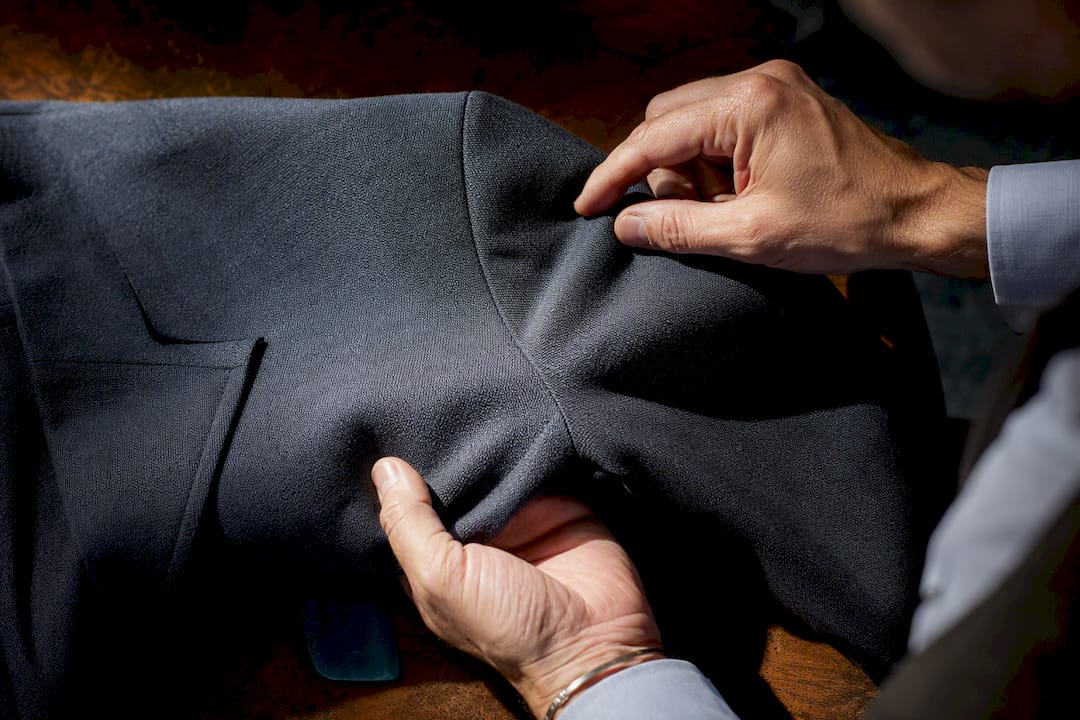
- The fit checks: shoulder seams sit flush at the edge of your shoulder, sleeves stop at the wrist bone, trousers break gently at the shoe, and the collar sits close enough to the neck to slip one finger underneath, no more.
Examples of business formal commonly cited for men include the dark suit and tie combination, tailored dress shirts, and formal leather shoes, precisely the pieces above. In warmer conditions, swap heavyweight wool for tropical-weight wool or a wool-cotton blend that breathes without losing structure.
Pro Tip: Wear a new suit around the house for a few hours before any high-stakes event. Sit, walk, reach for something on a high shelf. Movement reveals pinch points, collar gaps and jacket ride-up that a static fitting-room mirror never shows.
Business formal for women: tailored options, fit and modesty rules
Women’s business formal offers more silhouettes, but the same conservative logic applies: structure, coverage and restraint.
- A tailored trouser suit in navy, charcoal, black or dark grey, jacket and trouser matched in fabric and colour.
- A skirt suit with a hem sitting at or just below the knee, never shorter.
- A structured suit dress, worn with a blazer for the most formal occasions.
- A blouse in silk or a silk-look fabric, in white, cream or a muted tone, with a modest neckline.
- Closed-toe court shoes or formal flats in black or a neutral shade, never open-toe sandals.
Reed’s guidance describes tailored suits or structured dresses paired with closed-toe shoes as the defining combination for women, and it holds up across most industries. Sheer hosiery in a neutral shade finishes the look for the most formal rooms, though bare legs with a longer hemline are increasingly accepted in warmer climates. For heat and humidity, a lightweight wool-blend suit or a linen-cotton dress with a cropped jacket keeps the silhouette formal without the discomfort.
Colours, fabrics and seasonal considerations
Business formal rewards restraint in colour and precision in fabric. Stick to a palette built around navy, charcoal, black and dark grey, with pinstripes or a faint herringbone as the only acceptable patterns.
- Navy and charcoal wool suits for year-round wear in air-conditioned offices.
- Tropical-weight wool or a wool-linen blend for genuinely hot, humid days.
- Cotton dress shirts and silk or silk-blend blouses that hold their shape without clinging.
- Darker shades read as more formal, so save black and midnight navy for the highest-stakes rooms.
Emily Post’s dress code guide notes that fabric weight and colour depth both signal formality, and that seasonal adjustment is expected rather than a compromise on the dress code itself. A well-cut tropical wool suit is every bit as formal as its heavier winter counterpart, just better suited to a Singapore afternoon.
Accessories, grooming and finishing details
The garments carry most of the message, but finishing details are what separate “formal” from “trying to look formal.”
- Shoes should be leather, polished, and free of visible scuffs; resole before the sole shows wear.
- A slim leather belt should match your shoe colour exactly, not approximately.
- A simple analogue watch and, at most, a wedding band or a single discreet ring cover the jewellery brief.
- Hair should be neat and off the face, nails trimmed, facial hair groomed to a clean, deliberate line, and makeup, where worn, kept understated.
- Pocket squares, tie bars and cufflinks belong on the most formal occasions only, never all three at once.
Building a business formal capsule wardrobe that actually works
You do not need a wardrobe of suits to dress well every time. A tight, well-chosen capsule covers most demands, and it is far more useful than a rail of similar-looking pieces you rarely reach for.
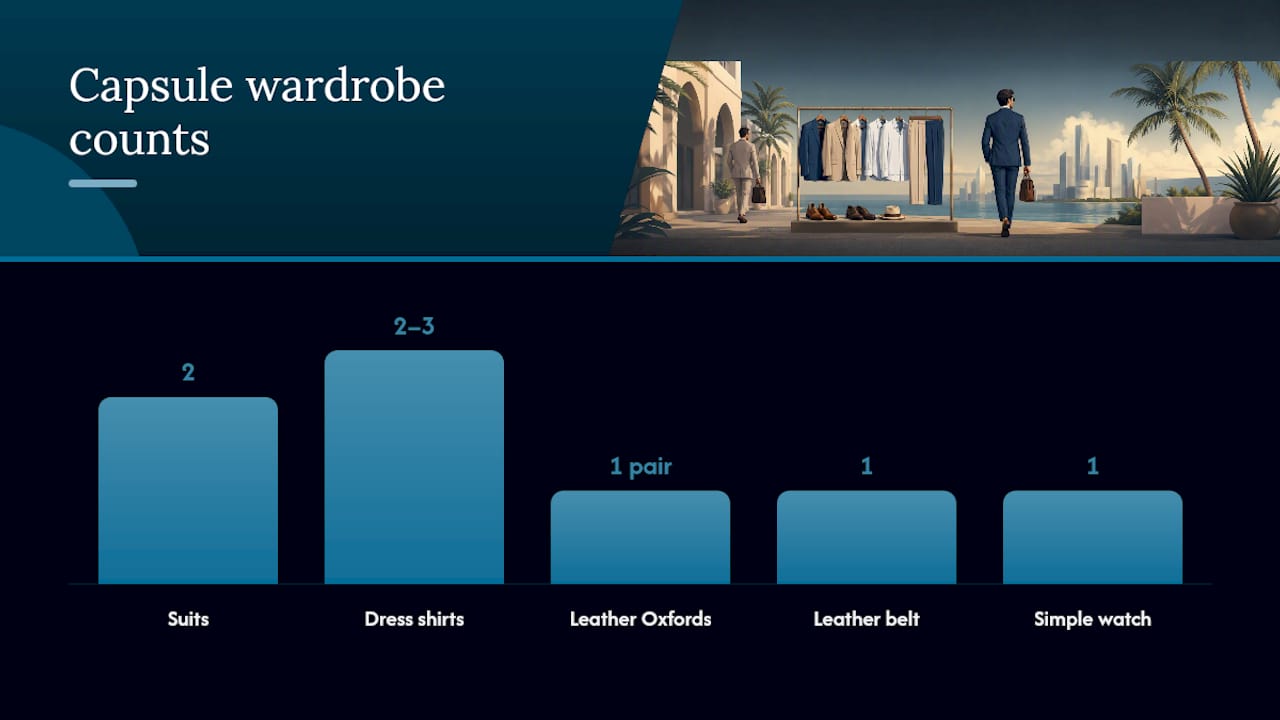
- Two suits, one navy, one charcoal, in a fabric weight suited to your climate.
- Two or three white or pale blue dress shirts, cut close but not tight.
- One pair of black leather Oxfords, kept polished and resoled as needed.
- A slim leather belt and a simple watch to cover the accessory brief.
- One silk tie in a solid colour or subtle pattern, versatile enough for any formal room.
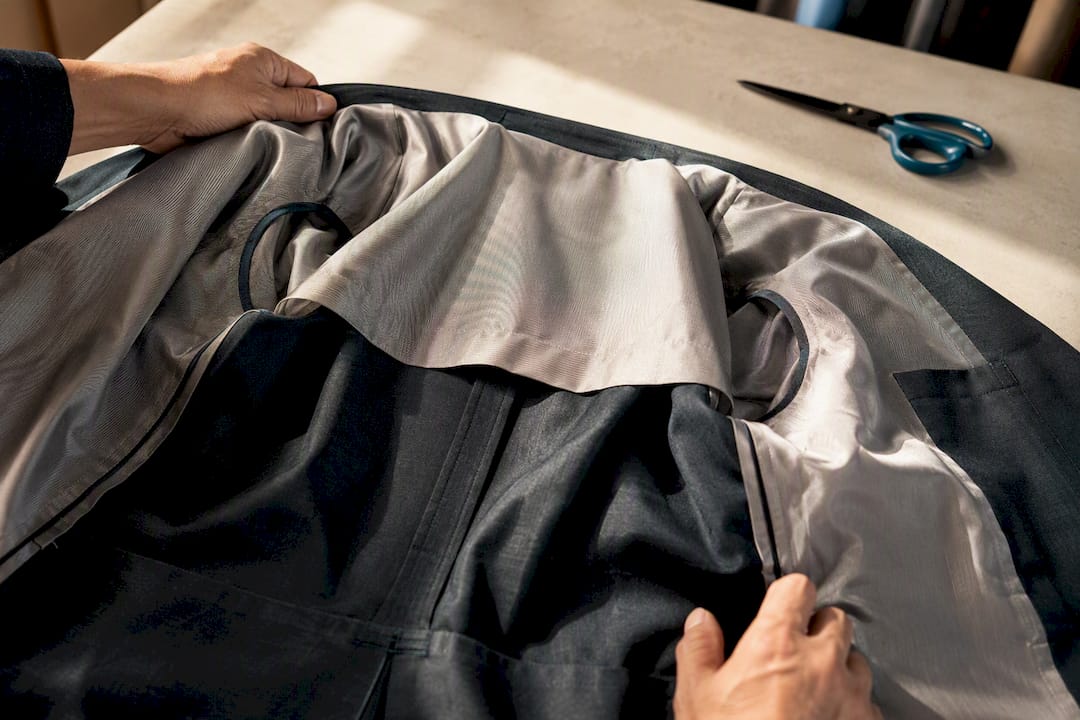
That short list mirrors StyledMood’s own capsule recommendation and it holds because each piece earns its place through repeated wear, not novelty. Ready-to-wear suits off the rack fit an average build reasonably well and suit a tight deadline. Bespoke tailoring, built around your own measurements over two to three fittings, corrects the shoulder, sleeve and waist issues that ready-to-wear can never fully solve, and it tends to outlast several off-the-rack replacements. Business formal remains the norm in law, finance and executive circles specifically because fit and cloth quality are noticed in those rooms far more than in a casual office.
Pro Tip: Before any interview or high-stakes meeting, sit down, walk a short distance and raise your arms as if reaching for a shelf. A properly tailored jacket won’t ride up, gape at the collar or pinch at the waist. If it does, that’s your fitting session, not your event.
Your pre-event readiness checklist
Run through this before you leave the house:
- Suit pressed, shirt ironed, shoes polished and free of scuffs.
- Tie knot centred, collar sitting flat, no visible undershirt lines.
- Sit, stand and walk once in the full outfit to catch any last pinch points.
- Pack a spare shirt or blouse and a small stain-removal kit for longer days.
- If the host specifies a variation, follow their instruction over any general rule here.
A tailor’s note on fit and confidence
Fit changes how a room reads you before you have said a word. A jacket that sits close through the shoulder and breaks cleanly at the trouser communicates more composure than an expensive fabric ever will on its own. My one rule for any client stepping into a big meeting: sit down in the suit before you commit to wearing it that day. If it moves with you, wear it with confidence.
— Aaron Fan
How Ron & Rich turns business formal into your advantage
Off-the-rack suiting solves for an average build. Bespoke tailoring solves for yours, correcting shoulder, sleeve and waist issues that no amount of alteration can fully undo. That means a personal consultation, fabric selection suited to your climate and role, and multiple fittings to refine shoulder, sleeve and trouser break until the suit moves the way you do.
If a deadline is close, our ready-to-wear and tailored collection covers navy and charcoal essentials without the wait. If you want the fit that only comes from working to your own measurements, book a consultation through our bespoke tailoring process and walk into your next board meeting or interview in a suit built for you, not adjusted for you.
Sources
For deeper context on dress codes and regional guidance, see the Singapore business dress code guide, how to choose a business suit in Singapore, and signature style advice on fabric and finishing.
- Business formal (Creighton University career centre)
- What Is Considered Appropriate Business Attire? (Indeed Singapore)
- Attire guide: dress codes from casual to white tie (Emily Post)