Business Casual Men: Tailored Outfits for Professionals
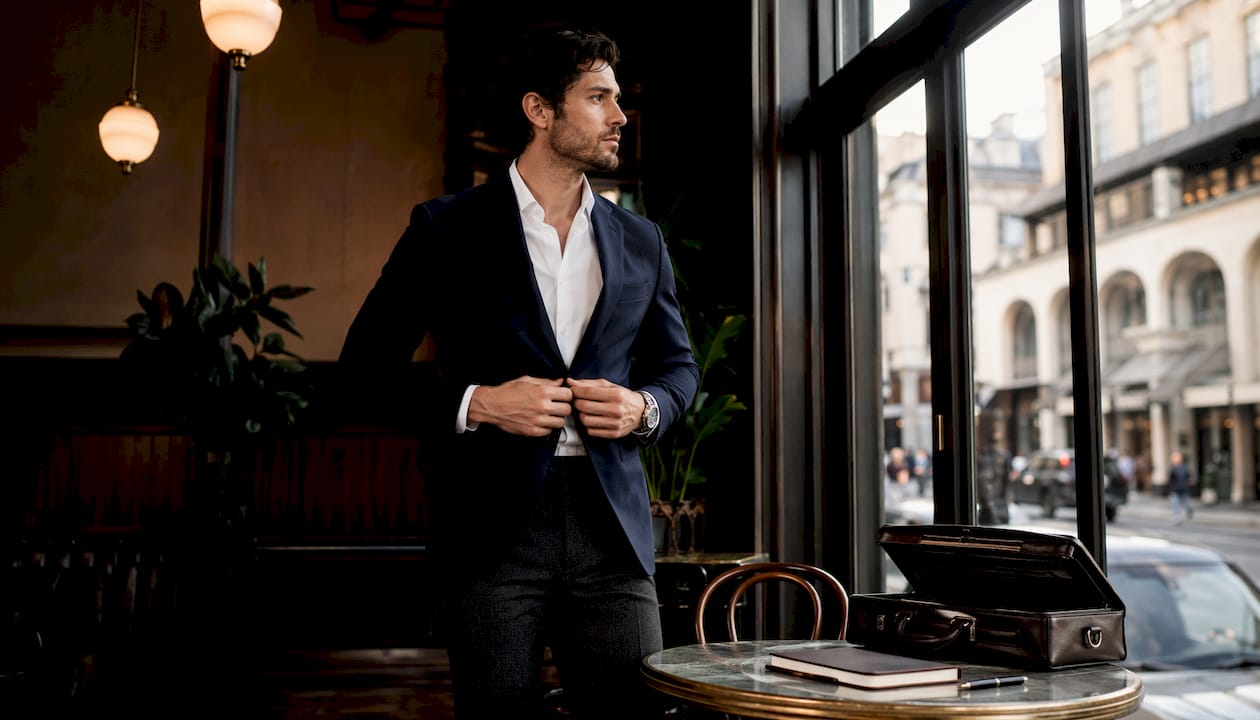
Modern business casual for men is a structured outer layer paired with a collared foundation and intentional comfort, breathable fabrics and a silhouette that reads considered, never low-effort. The jacket is the dividing line: keep it in rotation and you can meet nearly any client-facing expectation. Remove it, and you’ve shifted into smart casual territory.
Three rules to use right now:
- The jacket anchors formality. A sport coat or unstructured blazer over a collared shirt covers most situations.
- A collar is required. Crew-neck tees and hoodies don’t belong here, regardless of fabric quality.
- At least one tailored element. Dress trousers, leather shoes, or a fitted shirt signals intention.
Quick verdicts by situation: client meeting: blazer, dress trousers, leather shoes; internal day: chinos, oxford shirt, loafers; hybrid/remote: fine-gauge knit polo, tailored trousers, camera-friendly neutral tones; casual Friday: dark chinos, clean OCBD shirt, minimal sneakers or loafers.
Table of Contents
- What does every business casual wardrobe actually need?
- How should your clothes actually fit?
- Which fabrics work across the seasons?
- Outfit templates for every workplace situation
- How do you read the room and calibrate formality?
- Why bespoke tailoring transforms a business casual wardrobe
- Accessories and grooming that complete the look
- How does office culture and geography shape your choices?
- Common mistakes that undermine a business casual look
- Key Takeaways
- Why fit has always been the real conversation
- How Ronandrich helps you build a wardrobe that works
What does every business casual wardrobe actually need?
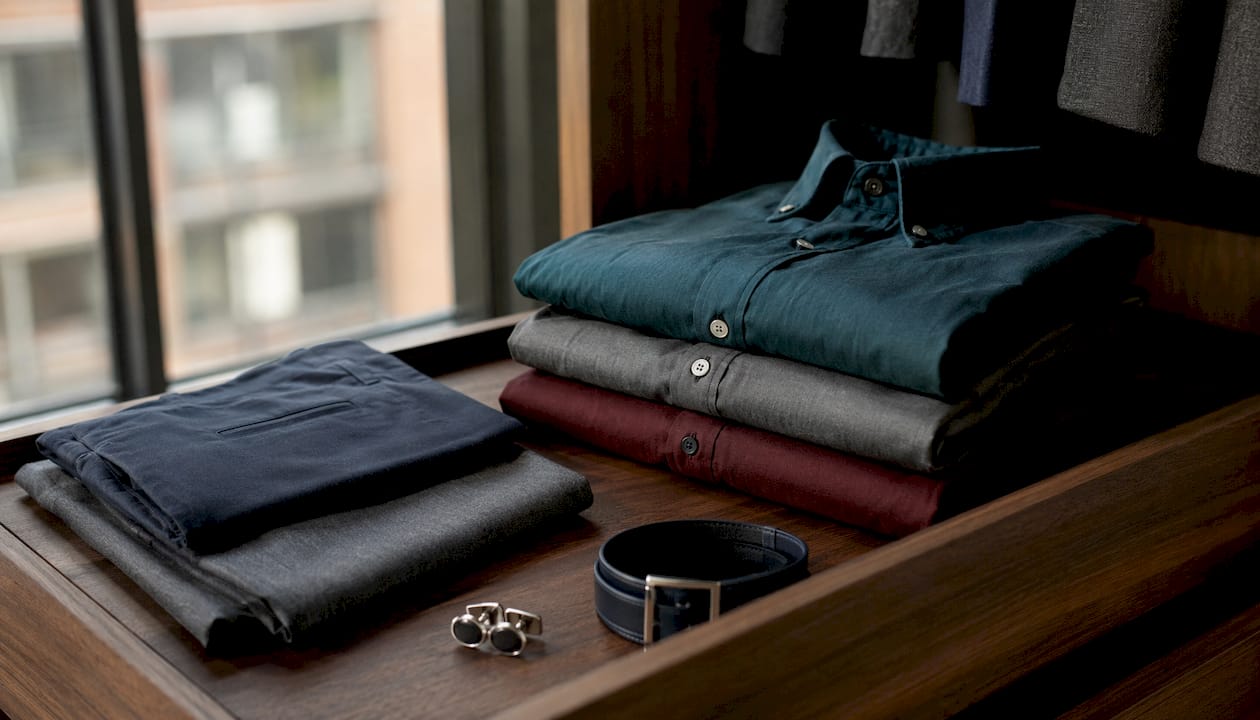
The foundation is smaller than most men think. One blazer, two pairs of trousers, and three shirts generate more combinations than a closet full of trend pieces ever will.
Core pieces:
- Unstructured blazer or sport coat — navy first; it pairs with charcoal, tan, and white without effort
- Wool dress trousers — charcoal or mid-grey; the most formal trouser in the rotation
- Chinos — tan or stone; the workhorse for internal days and casual Fridays
- Collared shirts — white poplin, light blue oxford, and a subtle stripe cover every register
- Fine-gauge knits — merino crewneck or knit polo in muted tones; acceptable under a blazer or alone on remote days
- Leather shoes — loafers or plain-toe derbies in tan or dark brown
- Leather belt — match it to your shoes, always
Color logic is straightforward: navy, charcoal, white, and tan are your foundation. Every piece in those four tones works with every other. Add one accent such as burgundy, forest green, or a textured knit and the outfit reads personal without reading loud.
Formality shift: dress trousers and leather shoes push toward business; chinos and loafers pull toward smart casual. The blazer is the lever that controls the whole register.
Pro Tip: Invest in fit for foundation pieces first. A well-fitted navy blazer and two pairs of tailored trousers will serve you longer than a wardrobe of trend items that date within a season.
| Piece | Formality Level | Best Colors |
|---|---|---|
| Wool dress trousers | High | Charcoal, mid-grey, navy |
| Chinos | Medium | Tan, stone, olive |
| Unstructured blazer | High | Navy, charcoal, camel |
| Oxford shirt | Medium–High | White, light blue, stripe |
| Fine-gauge knit polo | Medium | Grey, white, navy |
| Leather loafers | Medium–High | Tan, dark brown, black |
How should your clothes actually fit?
Fit, not price or brand, is the decisive factor in whether a business casual outfit reads professional. A $200 blazer with a perfect shoulder seam will outperform a $600 one that pulls across the back.
Fit checkpoints:
- Jacket shoulder seam sits at the edge of the shoulder bone, not hanging over the arm
- Chest ease allows one flat hand between lapel and chest ,no pulling, no billowing
- Sleeve length shows roughly a quarter inch of shirt cuff
- Shirt collar closes with two fingers of space; no gap, no choking
- Trouser waist sits without a belt doing structural work
- Trouser break a slight break or no break; pooling fabric reads unfinished
Common alterations worth requesting:
- Take in the jacket waist (suppression adds shape without restricting movement)
- Shorten jacket sleeves from the cuff (preserves buttonholes)
- Hem trousers to your preferred break
- Taper a shirt body for a cleaner tuck
Body-type guidance: broader frames benefit from unlined, softer blazers that don’t add bulk at the shoulder; slimmer builds should prefer closer tailoring to avoid excess fabric that reads shapeless. In both cases, the trouser silhouette matters as much as the jacket.
Pro Tip: In-store fit test: button the jacket, cross your arms, then uncross. If the back rides up sharply or the chest pulls open, the jacket is too small regardless of how it looks standing still.
Which fabrics work across the seasons?
Style directors recommend breathable fabrics and relaxed but structured silhouettes as the defining characteristic of modern business casual. Fabric choice is where comfort and polish meet.
Seasonal guidance:
- Spring/Summer: Lightweight wool, linen-wool blends, and cotton twill. These breathe without losing structure. A linen-blend blazer in navy reads polished at 85°F in a way that a heavy flannel never could.
- Fall/Winter: Wool flannel trousers, merino knits, and cashmere-blend blazers. The weight adds authority; the natural fibers press cleanly and hold shape through a long day.
Fabrics that undermine the look: distressed denim (even well-fitted), heavy jersey, and overly shiny synthetics. Polyester blends wrinkle under pressure and reflect light in a way that reads cheap under office lighting.
Care basics: press trousers after every two wears, hang jackets on shaped hangers, and store knits folded rather than hung. A fabric shaver handles pilling on merino before it becomes visible.
Pro Tip: A wool-linen blend blazer is the single most versatile summer purchase. It travels without creasing badly, breathes in warm offices, and still reads structured enough for a client lunch.
| Season | Recommended Fabrics | Avoid |
|---|---|---|
| Spring (March–May) | Cotton twill, linen-wool blend | Heavy flannel, thick jersey |
| Summer (June–August) | Lightweight wool, linen blend | Polyester, heavy denim |
| Fall (September–November) | Wool flannel, cotton oxford | Shiny synthetics |
| Winter (December–February) | Merino, cashmere blend, flannel | Unlined linen, thin cotton |
Outfit templates for every workplace situation
1. Client meeting (elevated business casual) Navy unstructured blazer, charcoal wool trousers, white poplin shirt (tucked), tan leather derbies, leather belt. Optional: pocket square in white linen. Tailoring tweak: jacket waist suppression makes this read nearly as sharp as a suit.
2. Internal office day Stone chinos, light blue oxford shirt (tucked), tan loafers, no blazer required. Add a fine-gauge merino crewneck over the shirt on cooler days. Clean and considered without being overdressed for a desk day.
3. Hybrid/remote (camera-friendly) Knit polo in white or grey with tailored trousers in navy or charcoal. Knitwear reads polished on video without the stiffness of a dress shirt. Keep the background neutral and the collar visible.
4. Casual Friday / after-hours transition Dark chinos, OCBD shirt in a subtle stripe, clean leather sneakers or suede loafers. To move this into after-hours: swap the sneakers for leather loafers, add a textured knit layer, and remove any visible work bag. The outfit shifts register without a full change.
How do you read the room and calibrate formality?
When in doubt, start one level more formal, it’s far easier to remove a jacket than to source one at the last minute.
Five quick checks before you dress:
- Are you client-facing today?
- Will senior leadership or external stakeholders be present?
- What is the industry norm (finance vs. creative agency)?
- Is this a morning or evening event?
- Is the location a formal office, a co-working space, or off-site?
Signals that allow dressing down: an internal-only calendar, a casual email from leadership, a team lunch at a casual restaurant. Signals that require dressing up: external presentations, investor meetings, first-time client introductions, any event described as “business” in the invite.
Jeans, even dark and well-fitted, sit in smart casual territory and carry real risk in conservative business casual offices. When the context is ambiguous, choose chinos.
Why bespoke tailoring transforms a business casual wardrobe
Bespoke elevates business casual most noticeably through fabric choice and construction details. A well-cut custom shirt and a pair of tailored trousers reduce the need for frequent alterations and maintain proportion across body types in a way off-the-rack pieces rarely achieve.
The bespoke process at Ronandrich:
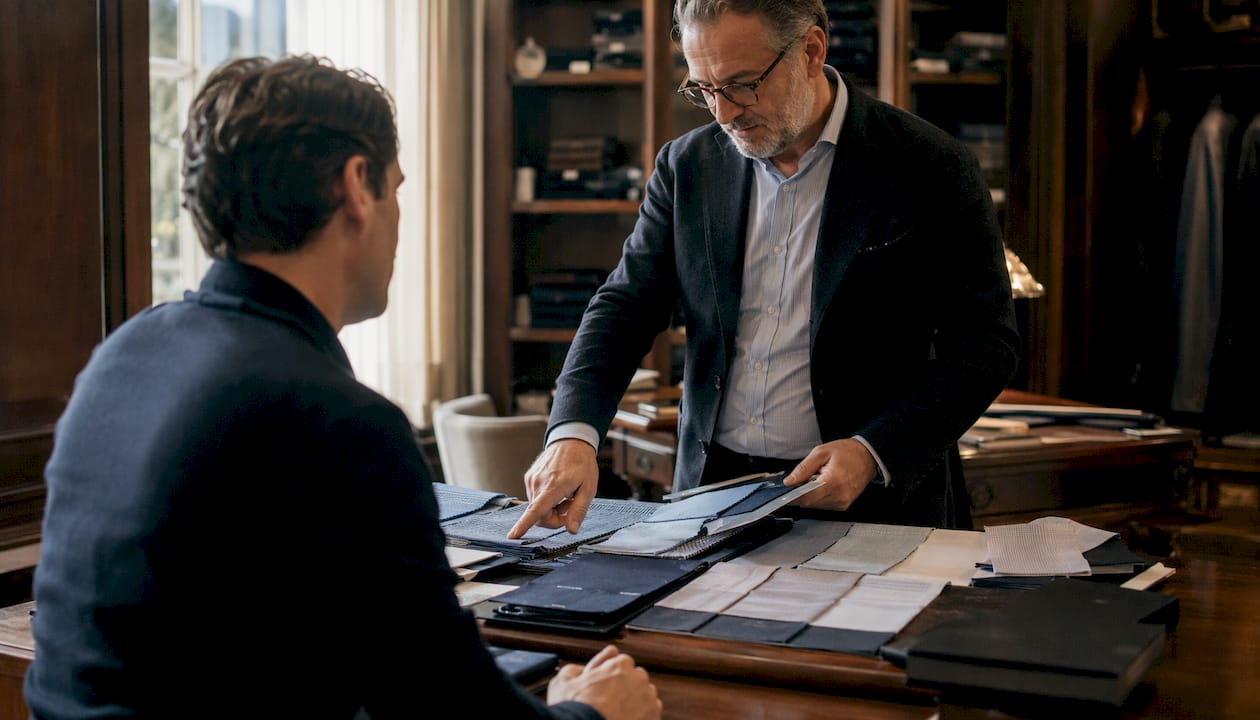
- Consultation — discuss lifestyle, wardrobe priorities, and style references; fabric swatches reviewed together
- Measurements — full body measurements taken by a master tailor; pattern drafted to your proportions
- First fitting — basted garment tried on; adjustments marked and discussed
- Second fitting — refined garment; final tweaks confirmed
- Delivery — finished piece with aftercare guidance
| Service | Typical Timeline | Starting Investment |
|---|---|---|
| Bespoke blazer/sport coat | 4 weeks | Around $800 |
| Bespoke trousers | 2–3 weeks | Around $350 |
| Custom shirt | 2–3 weeks | From $200 |
| Full bespoke suit | 6 weeks | Around $1,500 |
Investment ranges are indicative; final pricing depends on fabric selection, construction details, and number of fittings.
Founded in 1979 by master tailor Richard Fan, Ronandrich has spent over four decades refining this process. For a first appointment, bring two or three reference images of outfits you admire, note which fabrics you find comfortable, and be prepared to discuss where you’ll wear the garment most often. That context shapes every decision from canvas construction to trouser break. Learn more about the bespoke tailoring process before your first visit.
Accessories and grooming that complete the look
Accessories in business casual should read intentional, not decorative. A dress watch in a simple case — steel or leather strap — adds quiet authority without competing with the outfit. Avoid oversized sport watches with complex bezels in client-facing settings.
Socks: match them to your trousers, not your shoes. A charcoal trouser with a navy sock reads more considered than a white athletic sock regardless of shoe color. Subtle texture or a fine stripe is acceptable; bold novelty patterns belong on casual Fridays only.
Ties: optional in most business casual contexts, but a knit tie or a woven silk in a muted tone can sharpen an outfit for a client meeting without tipping into formal territory. Skip the tie entirely on internal days.
Grooming: a clean, shaped haircut matters as much as the clothes. Business casual reads polished when every element is maintained — pressed trousers, clean shoes, and a haircut that doesn’t look overdue. Facial hair is acceptable when it’s clearly intentional and well-groomed.
How does office culture and geography shape your choices?
Business casual is not a universal standard. Observing immediate office norms and leadership behavior is the most reliable calibration tool available.
In financial and legal sectors across New York and Chicago, business casual still leans toward tailored trousers, leather shoes, and a blazer as the default. In West Coast tech offices, the register shifts: chinos, a quality knit, and clean sneakers can read as business casual without a jacket. Creative industries in cities like Los Angeles or Austin often treat smart casual and business casual as interchangeable.
International context matters too. Japanese business culture tends toward a more conservative interpretation; European offices, particularly in Scandinavia, often accept a relaxed blazer with quality denim. When traveling for work, err toward the more formal end of what you’d wear at home. Contemporary menswear trends continue to blur the line between relaxed and polished, but in a client-facing context, structure still signals respect.
Common mistakes that undermine a business casual look
The most frequent errors aren’t about wrong pieces — they’re about proportion, maintenance, and misreading the register.
- Wearing clothes that don’t fit. A baggy blazer or trousers with excess break undermine every other correct choice.
- Neglecting shoe quality. Scuffed or worn-down shoes read as careless regardless of how well the rest of the outfit is assembled.
- Treating “casual” as “relaxed about maintenance.” Wrinkled shirts, unpressed trousers, and pilling knits signal low effort.
- Over-accessorizing. A statement watch, a pocket square, a lapel pin, and a patterned tie simultaneously compete rather than complement.
- Defaulting to jeans when the context is ambiguous. Chinos are always the safer choice and read more versatile across business casual situations.
- Ignoring the tuck. A tucked shirt reads more polished in business casual; an untucked shirt signals smart casual or casual Friday.
Key Takeaways
Fit, fabric, and a structured outer layer are the three variables that determine whether a business casual outfit reads professional or merely comfortable.
| Point | Details |
|---|---|
| The jacket is the dividing line | Keep a blazer in rotation; removing it shifts the outfit into smart casual territory. |
| Start with a capsule | One blazer, two trousers, and three shirts generate the most combinations per dollar spent. |
| Fit outranks price | A correctly fitted $500 blazer reads more professional than an ill-fitting $1000 one. |
| Fabric drives seasonal polish | Lightweight wool and linen blends for summer; merino and flannel for cooler months. |
| Ronandrich for bespoke precision | Custom-tailored blazers, trousers, and shirts from Ronandrich deliver fit and construction that off-the-rack pieces rarely match. |
Why fit has always been the real conversation
Most men approach business casual as a question of which pieces to buy. After decades at Ron & Rich, I’d argue the real question is always fit first. A client can arrive with the right blazer, the right trousers, the right shoes and still look uncertain, because nothing sits where it should. The garment is wearing him rather than the other way around.
What clients ask us most often isn’t “what should I wear?” It’s “why doesn’t this look right when I follow all the rules?” The answer is almost always construction and proportion. A soft, unlined blazer cut to your actual shoulder width changes how you carry yourself in a room. A trouser with the right rise and a clean break changes how you read at a conference table.
Heritage matters to us not as nostalgia but as method. Richard Fan built this house in 1979 on the principle that a garment should serve the man wearing it, not the other way around. That principle hasn’t changed. What has changed is the vocabulary — intentional comfort, hybrid wardrobes, camera-friendly fabrics but the craft underneath remains the same. Timeless design and precision fit are not style preferences. They are the foundation of professional credibility.
How Ron & Rich helps you build a wardrobe that works
The three problems most professionals bring to us are the same: clothes that don’t fit properly, fabrics that don’t hold up, and a wardrobe that doesn’t adapt across situations. Our bespoke service addresses all three from the first consultation.
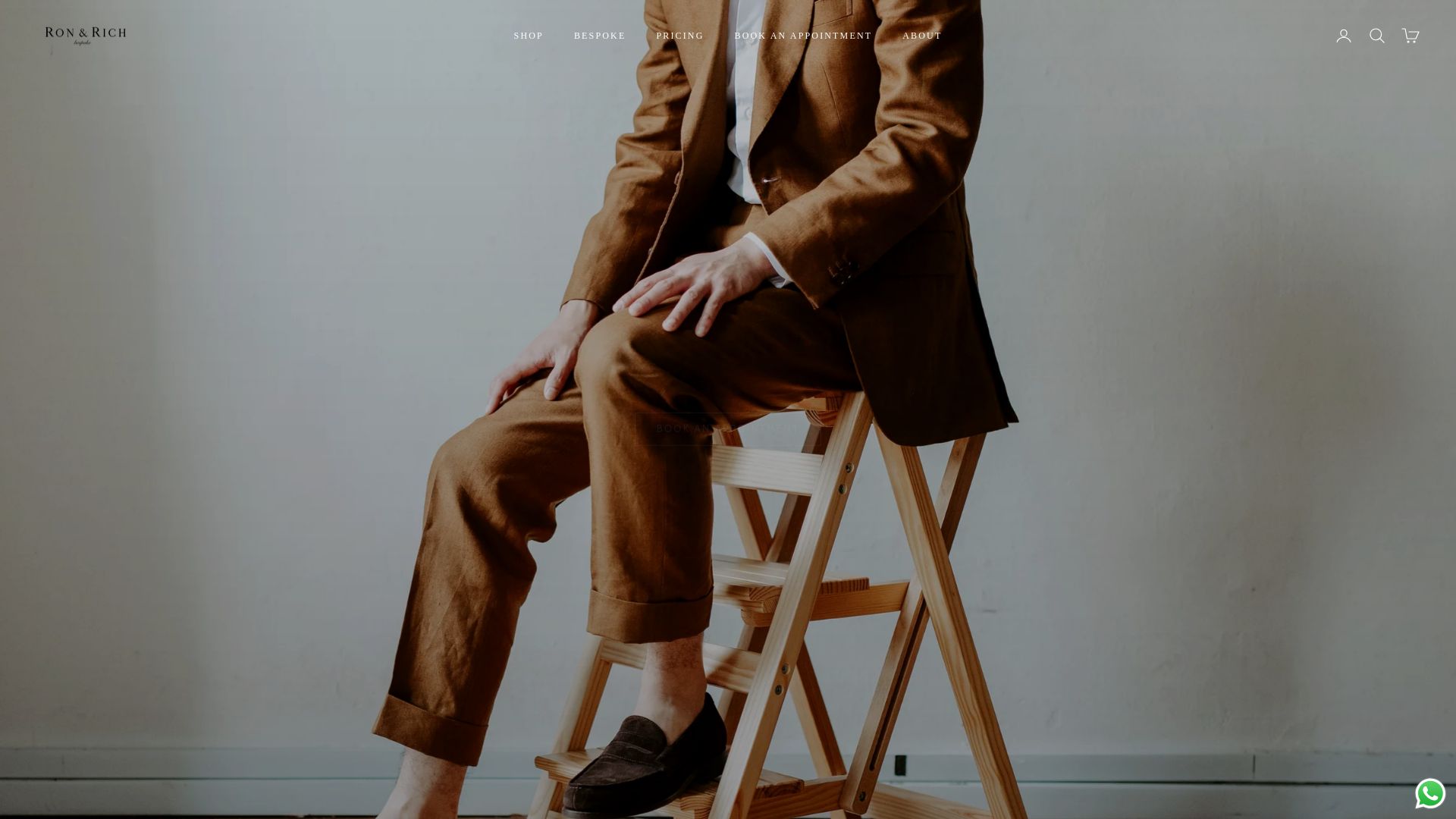
We offer bespoke blazers and sport coats, tailored trousers, custom shirts, and a ready-to-wear collection for those who want quality pieces on a shorter timeline. Every bespoke commission begins with a personal consultation, no assumptions, no standard blocks and includes fittings until the garment is exactly right. Turnaround for most pieces runs 6 to 8 weeks, and every garment comes with aftercare guidance so it holds its shape for years. If you’re ready to invest in a wardrobe that works as hard as you do, book your consultation with Ronandrich today.