Singapore Business Dress Code: A Professional's Guide
In Singapore, the default business dress code is business casual — though client-facing roles and traditional sectors like finance and law still expect business formal. The single most important action you can take is to dress one level above what you think is required until you know the room.
A few rules every professional should carry:
- Default level: Business casual is the norm at most Singapore companies, per MyCareersFuture guidance — but err toward business professional for first meetings.
- Fit first: A well-fitted chino and collared shirt reads more polished than an ill-fitting suit.
- Fabric matters: Lightweight, breathable materials — fine cotton, linen blends, tropical wool — are practical in Singapore’s heat, as the HSBC Singapore business guide notes.
- The third piece: A blazer, waistcoat, or structured cardigan instantly elevates an outfit for client-facing moments.
- Grooming: Neat, clean, and conservative is the standard across all levels.
Local resources worth bookmarking: the HSBC Singapore International Business Guide, MyCareersFuture, and Ronandrich for bespoke tailoring expertise.
Key Takeaways
Singapore’s business dress code defaults to business casual, but client-facing roles, traditional industries, and first meetings consistently call for business professional or formal attire.
| Point | Details |
|---|---|
| Default dress code | Business casual is the norm; move to business professional for client meetings and interviews. |
| Fit over price | A well-fitted mid-range garment reads more polished than an expensive ill-fitting one. |
| Fabric for climate | Choose tropical wool, fine cotton, or linen blends to stay comfortable in Singapore’s heat and AC. |
| The third piece | A blazer or structured cardigan elevates any outfit instantly for client-facing moments. |
| Ronandrich for fit | Bespoke tailoring from Ronandrich addresses fit, fabric, and climate in one appointment. |
Table of Contents
- What does the business dress code in Singapore actually look like?
- A quick outfit checklist before you leave the house
- How to dress for specific situations in Singapore
- Footwear, accessories, and grooming in Singapore offices
- How to stay polished in Singapore’s tropical climate
- How to read your company’s dress-code policy
- Why tailoring matters for professionals in Singapore
- A tailor’s perspective on dressing well in Singapore
- Ronandrich: bespoke tailoring built for Singapore professionals
- Sources
What does the business dress code in Singapore actually look like?
Singapore sits at an interesting intersection: a business city at heart, yet shaped by year-round tropical heat and a multicultural workforce. Foundit confirms that business casual is the most common default, though neatness and tidy appearance are non-negotiable at every level.
Business formal
The most conservative tier. Men wear a dark suit, dress shirt, tie, and leather oxfords. Women wear a tailored suit, formal dress, or a blazer paired with dress trousers or a knee-length skirt. Expected in banking, law, government, and for high-stakes client presentations. Suits and ties remain the norm in these traditional sectors even in Singapore’s heat.
Business professional
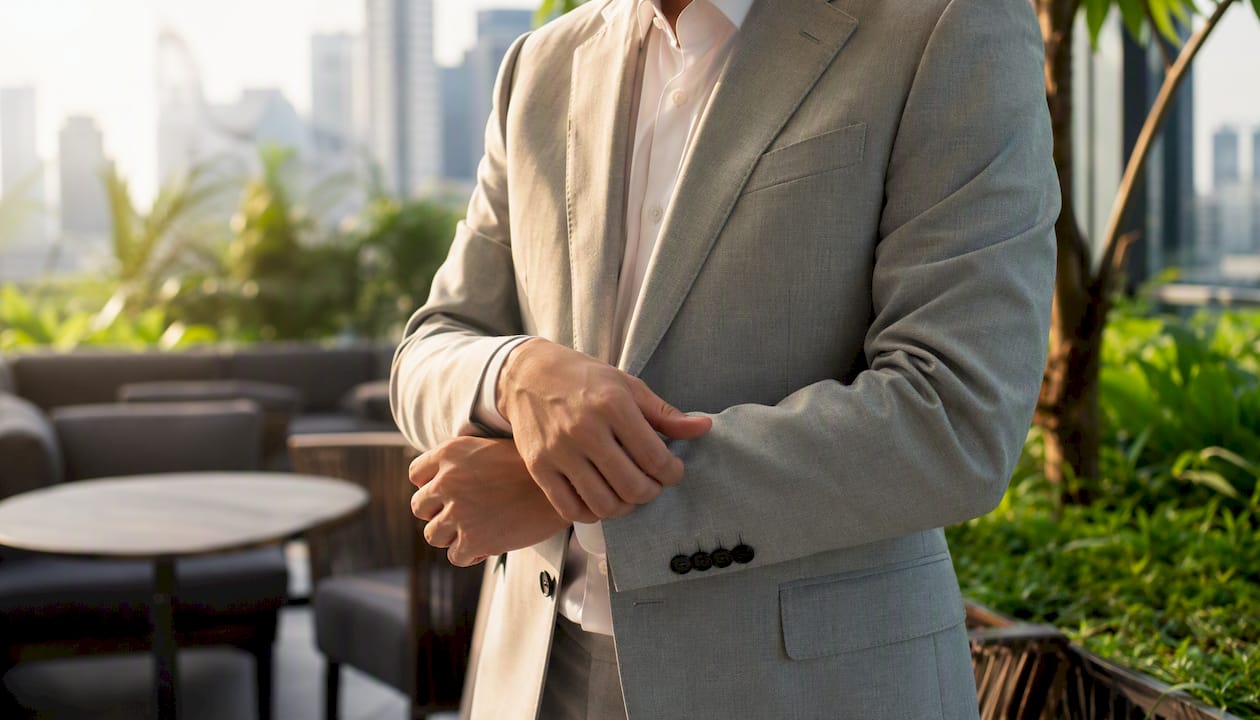
One step down from formal, but still polished. Men: dress trousers, a collared dress shirt, and a blazer (tie optional). Women: tailored trousers or a pencil skirt, a blouse, and a blazer or structured jacket. The standard for most corporate offices, client meetings, and interviews.
Business casual
The everyday default for many Singapore offices. Men: chinos or dress trousers, a collared shirt (polo or button-down), clean loafers or leather shoes. Women: tailored trousers or a midi skirt, a blouse or smart top, and closed-toe flats or low heels. Jeans and sneakers are generally discouraged unless the company explicitly permits them, per Indeed Singapore’s dress guidance.
Smart casual
Common in tech, creative agencies, and media. Men: well-fitted dark jeans or chinos, a plain T-shirt or casual button-down, clean leather or canvas sneakers. Women: tailored jeans, a smart blouse or structured top, and neat flats or ankle boots. The line between smart casual and sloppy is fit — everything should look intentional.
| Dress-code level | Typical components | When to use it in Singapore |
|---|---|---|
| Business formal | Dark suit, tie, dress shirt, leather shoes | Banking, law, government, high-stakes presentations |
| Business professional | Blazer, dress trousers, collared shirt (tie optional) | Corporate offices, client meetings, interviews |
| Business casual | Chinos, collared shirt, loafers | Most Singapore offices, internal meetings |
| Smart casual | Dark jeans, smart top, clean sneakers | Tech, creative, media, casual Fridays |
JobStreet Singapore’s attire guide reinforces that structured examples across these levels help professionals calibrate quickly. One local norm worth internalizing: for a first client meeting or a new workplace, err slightly overdressed. A blazer you can remove is far less awkward than being the most underdressed person in the room.
A quick outfit checklist before you leave the house
A reliable pre-departure routine takes under two minutes and prevents the kind of wardrobe regret that lingers through a morning meeting.
- Top: Is it clean, pressed, and free of visible logos or slogans? Collared or structured?
- Bottom: Trousers or skirt free of wrinkles and appropriate for the day’s meetings?
- Shoes: Polished or clean, closed-toe, and matched to the outfit’s formality level?
- Third piece: Do you have a blazer, waistcoat, or cardigan for any client-facing moment today?
- Accessories: Belt matches shoes; watch is conservative; jewelry is minimal and not distracting.
- Grooming: Hair neat, nails clean, fragrance light.
The third-piece rule
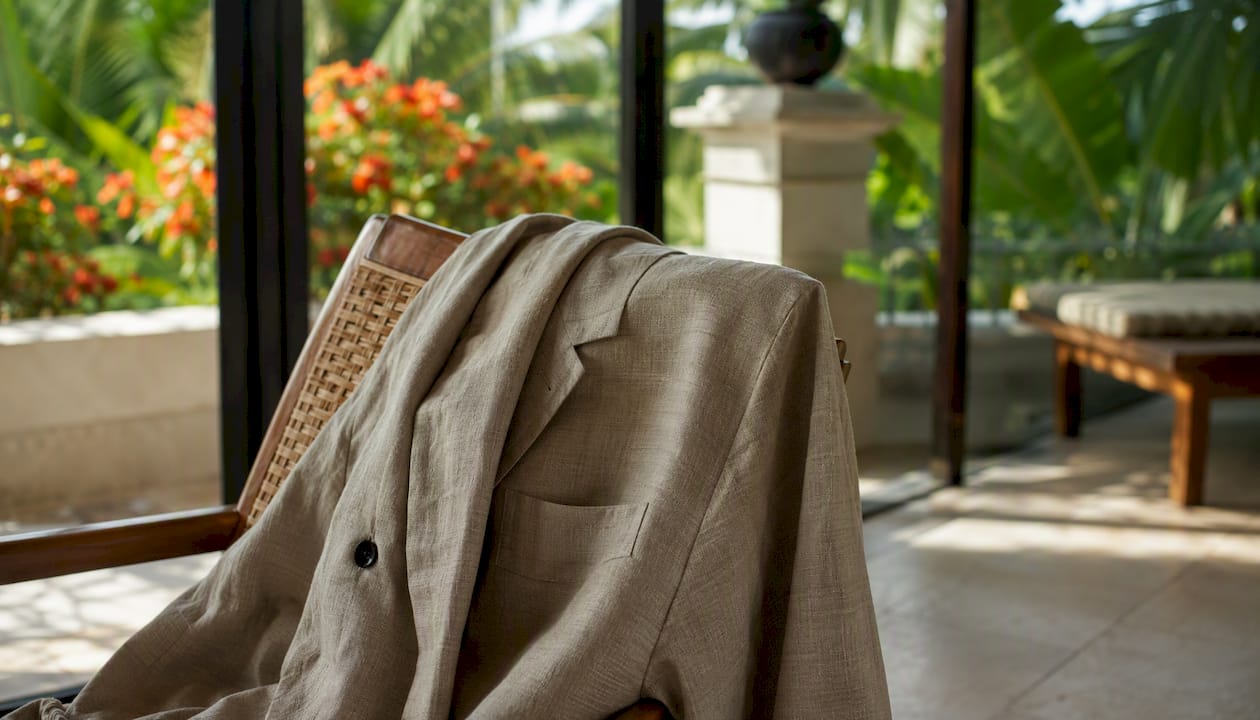
Adding one structured layer — a blazer, a waistcoat, or a fine-knit cardigan — is the fastest way to move an outfit from business casual to business professional without changing everything else. In Singapore’s climate, an unstructured linen blazer works well: it adds formality without trapping heat. Keep it on for client introductions, then remove it at your desk.
The 3-3-3 mental model
Before leaving, run three quick checks: three neutral pieces that work together (no clashing patterns), three fabric priorities (breathable, wrinkle-resistant, well-fitted), and three grooming basics (hair, nails, fragrance). It sounds simple because it is — but it catches the small details that accumulate into a polished impression.
Pro Tip: A master tailor’s most consistent advice: buy fewer pieces and have each one altered to your exact measurements. A shirt that fits your shoulders and collar precisely reads as more expensive than it is — and in Singapore’s humidity, a well-fitted garment also moves better and stays neater through a long day.
How to dress for specific situations in Singapore
First day at a new company
Default to business professional. Observe what leadership wears on day one, then calibrate from day two onward. A blazer over dress trousers and a collared shirt for men, or a tailored blouse with dress trousers for women, is a safe starting point at almost any Singapore company.
Job interviews
Dress one level above the company’s stated dress code. For a finance or law firm, that means a full suit. For a tech startup that lists “smart casual,” wear business casual with a blazer. A suit is rarely too much for an interview in Singapore — it signals respect for the process. Local career portals consistently advise conservative initial choices for first impressions.
Client meetings and presentations
Business professional is the floor. If the client is in banking, government, or a traditional industry, move to business formal. The question “Is a suit too much?” almost never applies in a client context — the risk of underdressing is always higher than the risk of overdressing.
Internal presentations
Business casual with a third piece. A blazer over your usual office outfit signals that you’ve prepared and you take the room seriously, without requiring a full suit.
Client lunches
Match the client’s expected level, then add one piece. If the lunch is at a formal restaurant, business professional is appropriate. A casual lunch at a hawker centre with a long-standing client allows smart casual — but keep it neat.
Casual Fridays
Casual Friday in Singapore typically means smart casual, not weekend casual. Dark, well-fitted jeans are usually acceptable; ripped jeans, graphic T-shirts, and flip-flops are not. When in doubt, check what your manager wears on Fridays.
On jeans and sneakers: Both are acceptable in tech and creative environments as a baseline. In most corporate offices, they belong only on casual Fridays and only when the policy explicitly permits them. Clean, minimalist leather sneakers are more acceptable than athletic trainers in most business casual contexts.
Footwear, accessories, and grooming in Singapore offices
Footwear
- Business formal: Oxford or Derby shoes in black or dark brown for men; closed-toe court shoes or low block heels for women.
- Business professional / casual: Loafers, monk straps, or clean leather shoes for men; pointed-toe flats, kitten heels, or ankle boots for women.
- Smart casual: Clean leather sneakers or minimalist canvas shoes — no athletic trainers, no open-toe sandals in most offices.
- Avoid scuffed, worn-down, or heavily branded footwear at any level.
Accessories
- Belt: Match leather color to shoes; avoid novelty buckles.
- Watch: A classic dress watch or a clean-faced sports watch reads well. Avoid oversized or flashy pieces in conservative environments.
- Ties: Required for business formal in traditional sectors; optional elsewhere. A well-chosen tie in a conservative pattern adds authority without effort.
- Jewelry: Minimal. A wedding band, one simple ring, and small stud earrings are universally appropriate. Avoid stacking bracelets or wearing statement pieces to client meetings.
- Bags: A structured leather briefcase or tote reads professional. Backpacks are acceptable in tech and casual environments; avoid heavily branded or worn bags in formal settings.
Grooming
- Hair should be neat and styled — not necessarily conservative, but intentional.
- Nails clean and trimmed; nail polish in neutral or muted tones is appropriate for client-facing roles.
- Fragrance should be light. Singapore’s heat amplifies scent, so less is always more.
- Visible tattoos: attitudes vary by industry. In finance and law, cover them for client meetings. In tech and creative sectors, they are generally accepted. When in doubt, cover for the first meeting and observe the culture.
- Facial piercings follow a similar logic: conservative industries expect them removed or minimized for client-facing roles.
How to stay polished in Singapore’s tropical climate
Singapore’s combination of outdoor heat and aggressive indoor air-conditioning creates a genuine wardrobe challenge. The solution is fabric selection and layering, not choosing between comfort and polish.
Fabrics that work
HSBC Singapore’s business guide recommends light suits and breathable fabrics as practical investments for the local climate. The best performers:
- Tropical wool: Woven loosely for airflow; holds its shape through a full day of meetings. The best all-round choice for suits and trousers.
- Fine cotton: Excellent for shirts and lightweight trousers; breathes well and feels comfortable against the skin in humidity.
- Linen blends: Lighter than pure linen and less prone to creasing; works well for blazers and casual trousers.
Avoid heavy synthetics, thick polyester, and non-breathable fabrics — they trap heat and show sweat quickly.
Layering for the AC
Most Singapore offices run their air-conditioning cold enough to require a layer at the desk. An unstructured blazer or a fine-knit cardigan solves this without adding bulk. Keep a light jacket at your desk rather than wearing it on the commute. A breathable undershirt under a dress shirt also helps manage the transition between outdoor heat and indoor cold.
Commute and wrinkle control
If you commute by MRT or walk between buildings, wrinkle-resistant fabrics save significant time. Wool-blend trousers and structured shirts hold their shape far better than linen or cotton alone. For longer commutes, carrying your blazer rather than wearing it preserves its shape and keeps you cooler until you arrive.
How to read your company’s dress-code policy
A written policy is the starting point, not the final word. What leadership actually wears on a Tuesday tells you more than any HR document.
When you receive a policy, scan for:
- Defined levels: Does it name specific tiers (business formal, business casual) or use vague terms like “professional appearance”?
- Explicit examples: Are specific items listed as permitted or prohibited (e.g., jeans, open-toe shoes, visible tattoos)?
- Client-facing clauses: Many policies require a higher standard when meeting clients, even in otherwise casual offices.
- Seasonal or event exceptions: Some companies relax standards on Fridays or during festive periods.
Questions worth asking HR or your manager
- “What does business casual mean here day-to-day — are chinos and a collared shirt the norm?”
- “Is there a different expectation when I’m meeting clients?”
- “Are jeans permitted on Fridays, and if so, are there any restrictions?”
- “Does the dress code change for company events or off-site meetings?”
If the written policy says “business casual” but every senior leader wears a blazer daily, follow the leaders. CIPD Asia’s guidance on regional dress codes notes that casualization has grown across Asia, but client-facing roles and senior positions tend to retain higher expectations regardless of what the policy document says.
Why tailoring matters for professionals in Singapore
Fit is the single variable that separates a polished outfit from a forgettable one. A well-fitted shirt and trouser in a mid-range fabric will consistently outperform an expensive suit that doesn’t sit correctly on your shoulders or break properly at the ankle.
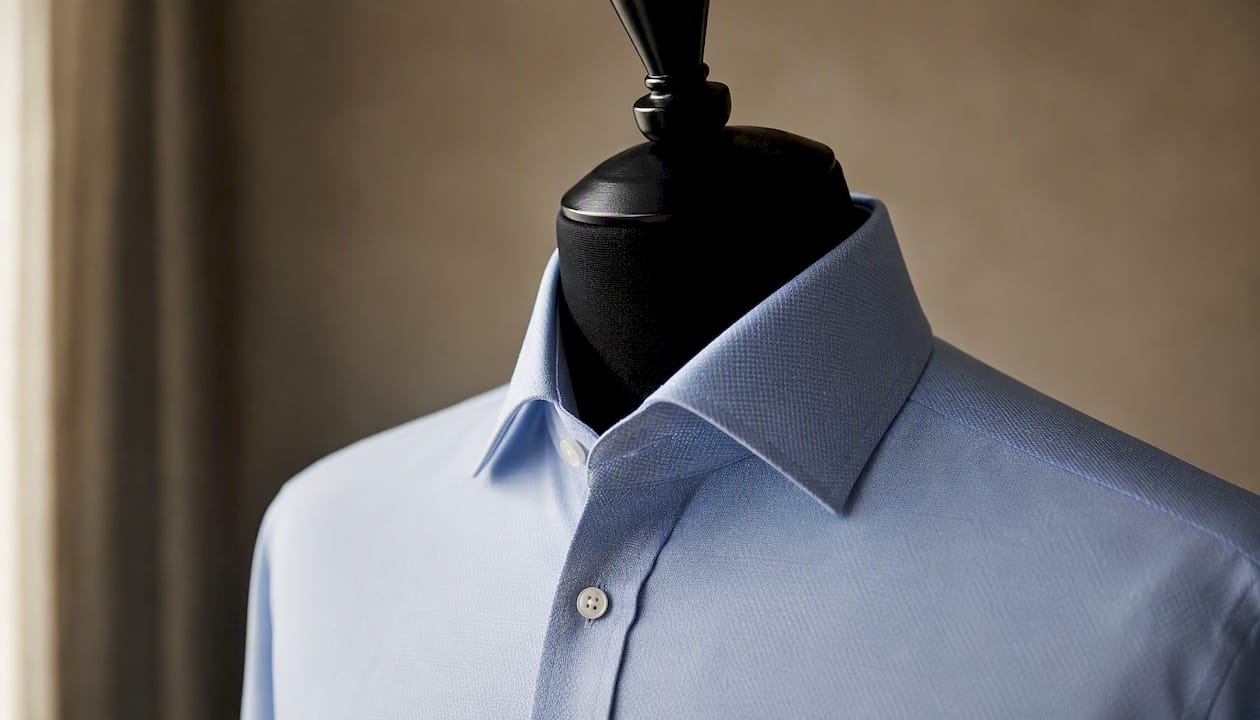
The practical benefits extend beyond appearance. In Singapore’s climate, a garment cut to your measurements moves with you rather than against you — less bunching at the collar, less pulling across the back, better airflow. Professionals in frequent client-facing roles, or those with proportions that don’t map neatly to standard sizing, gain the most from tailoring.
When to alter versus when to go bespoke
For most professionals, the first step is alteration: taking an existing suit or shirt to a skilled tailor for a sleeve shortening, a waist suppression, or a trouser hem. This costs a fraction of a new garment and often transforms how it wears. When you find yourself altering the same types of garments repeatedly, or when you need a suit for a high-visibility role, a bespoke appointment becomes the more efficient investment.
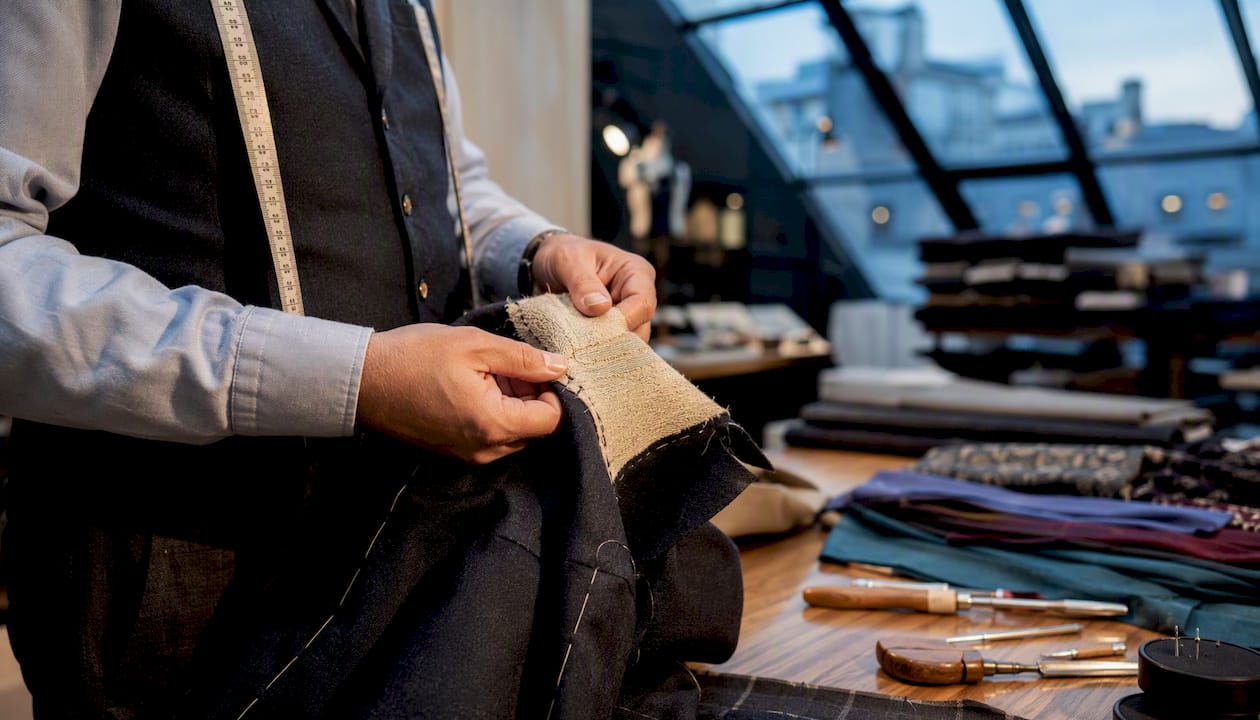
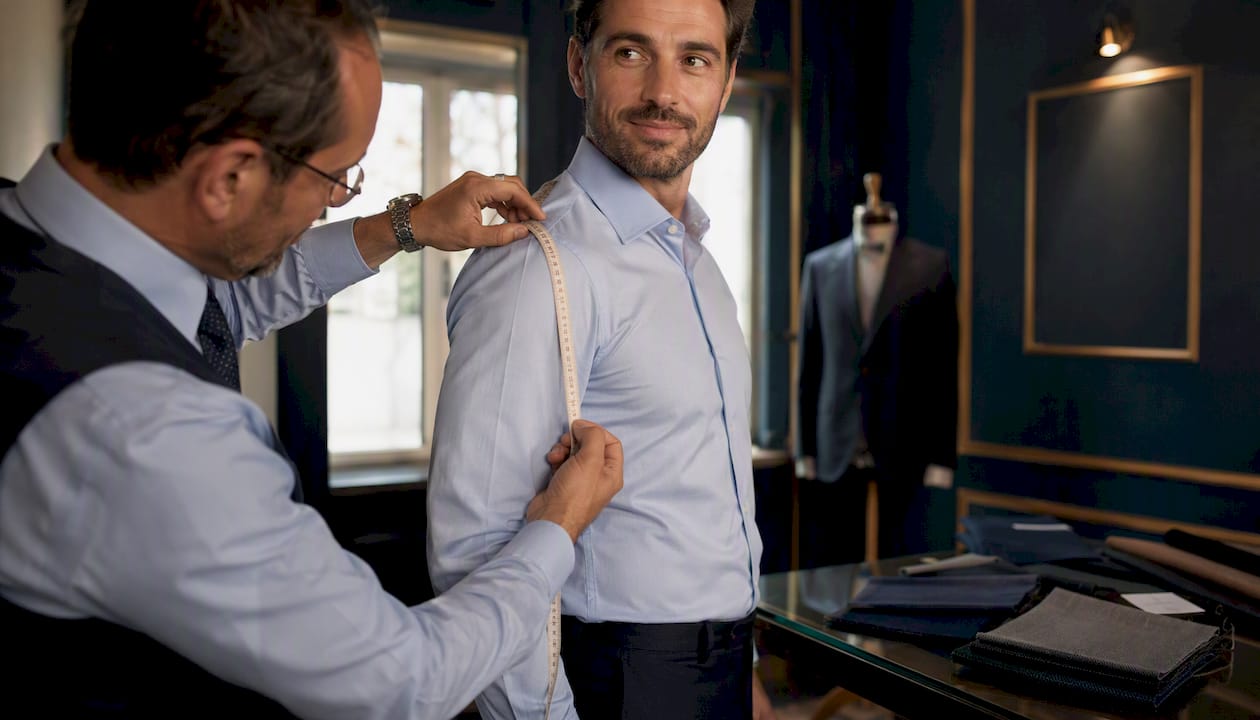
Ronandrich, founded in 1979 by master tailor Richard Fan, works through a stepwise process: consultation, precise measurement, a first fitting, and a final finish. The result is a garment built around your exact proportions rather than adjusted toward them. For professionals with client-facing roles, frequent presentations, or simply a commitment to dressing well in Singapore’s conditions, tailor-made suits offer a level of comfort and presence that off-the-rack cannot replicate.
A tailor’s perspective on dressing well in Singapore
There is a tendency among professionals to treat their wardrobe as a problem to solve once and then forget. The reality is that Singapore’s climate, combined with the demands of a client-facing career, means your clothes work harder than most. Fabrics stretch, linings wear, and the fit that felt right when you bought a suit two years ago may no longer reflect how you carry yourself today.
The most consistent advice from our house at Ronandrich: invest in fewer, better pieces and have each one maintained. A suit that is cleaned, pressed, and re-fitted after significant weight changes will serve you for a decade. An office jacket kept at your desk, rather than worn through the heat of a commute, holds its shape and its authority far longer.
One practical note that often surprises clients: the collar is the first place a shirt reveals poor fit. If your collar gaps, pulls, or sits unevenly, no amount of pressing will correct it. A properly fitted collar — one that allows two fingers of space and lies flat against the neck — is the detail that separates a polished professional from someone who simply owns expensive clothes.
Ronandrich: bespoke tailoring built for Singapore professionals
The fit problems this guide describes — shirts that pull across the shoulders, trousers that break awkwardly, suits that trap heat — are precisely what bespoke tailoring addresses. Ronandrich has been solving these problems for Singapore professionals since 1979, combining traditional craftsmanship with fabrics chosen for the local climate.
Our services cover the full range of professional wardrobe needs:
- Bespoke suits and jackets: Made to your exact measurements, in tropical wools and fine fabrics suited to Singapore conditions.
- Custom shirts: Cut to your collar and sleeve length, in breathable cotton and linen blends.
- Tailored trousers: Including ready-to-wear options with alteration services for a precise fit.
- Ready-to-wear: Select pieces available for faster fulfillment when a full bespoke commission isn’t required.
If you are building a wardrobe for a client-facing role, preparing for a new position, or simply tired of garments that almost fit, the right starting point is a consultation. Browse our suits and jackets collection or book a bespoke appointment to begin the process.
Sources
Trusted local references for Singapore dress-code and career guidance:
- International Business Guides - Singapore
- Business Casual Attire — Wait, What’s That? | MyCareersFuture content
- Foundit
- What Is Considered Appropriate Business Attire? | Indeed.com Singapore
- How to Dress for Success – A Guide to Business Attire | JobStreet Singapore
- Asia casual dress codes | CIPD
- Careersfinder