Cocktail Attire for Men: The Complete Dress Code Guide
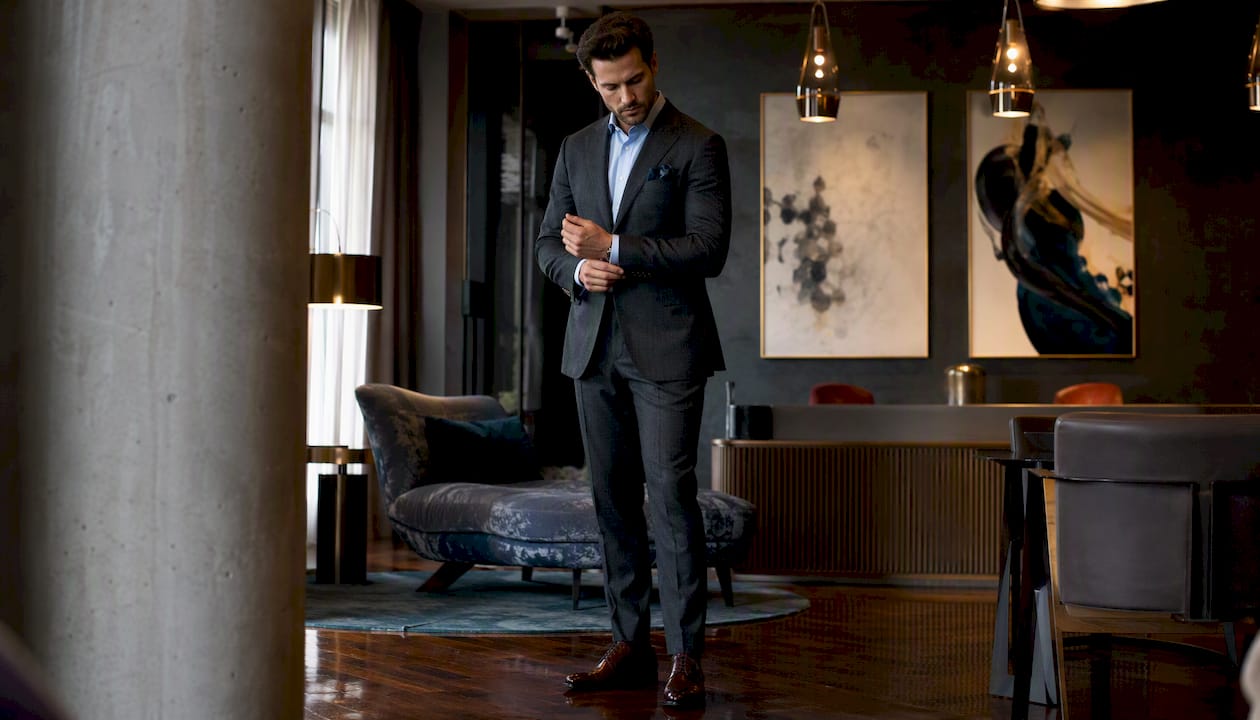
Cocktail attire for men is a polished, semi-formal dress code that sits between business casual and black tie. The single safest choice: a dark, well-tailored suit in navy, charcoal, or black, paired with a crisp dress shirt and leather dress shoes. Menswear experts at GQ confirm these as the standard staples, and they hold across virtually every cocktail setting globally.
Three outfits that work immediately:
- Conservative classic: Charcoal wool suit, white dress shirt, silk tie in a solid or subtle pattern, black Oxfords, matching leather belt.
- Modern alternative: Navy double-breasted blazer, tailored grey trousers, fine-gauge turtleneck, polished Chelsea boots.
- Relaxed but polished: Single-breasted navy blazer, cream dress trousers, knit polo, tan leather loafers.
When the invite is ambiguous, a quick note to the host is always the right move. Venue, time of day, and the host’s own formality level are the three fastest cues you can use.
Table of Contents
- What does cocktail attire actually mean for men?
- The core elements of cocktail attire for men
- Tasteful alternatives that still read as cocktail attire
- How to adapt your outfit by season and venue
- Fit rules every man should know before the event
- The items and combinations that break cocktail attire
- When bespoke tailoring is worth the investment
- Key Takeaways
- Why fit matters more than the label on your suit
- Ron & Rich bespoke tailoring for your next cocktail event
- Useful sources and further reading
What does cocktail attire actually mean for men?
Cocktail attire occupies a specific band on the formality spectrum. It is evening-oriented, celebratory, and polished without demanding the rigid structure of black tie. Understanding where it sits relative to neighboring dress codes prevents the most common mistake: showing up at the wrong level entirely.
| Dress Code | Formality Level | Key Garments | Tie Required? |
|---|---|---|---|
| Business Casual | Moderate | Chinos, sport coat, no tie | No |
| Semi-Formal | Moderate-High | Dark suit, dress shirt | Usually |
| Cocktail | High | Tailored suit or blazer + trousers | Often |
| Black Tie | Formal | Tuxedo, dress shirt, bow tie | Yes (bow tie) |
Cocktail attire leans more festive and evening-oriented than semi-formal, which tends to be more restrained and daytime-compatible. Think of semi-formal as the polished daytime meeting; cocktail is the evening celebration. When an invite specifies cocktail for a 7 PM reception, that is a signal to bring your best suit, not your office blazer.
A few cues that push the occasion toward the more formal end of cocktail: a venue with a dress code of its own (a private club, a rooftop ballroom), a black-tie host who has “relaxed” the requirement, or a wedding reception rather than a casual gathering. In those cases, lean toward a full suit with a tie rather than separates.
The core elements of cocktail attire for men
A navy, gray, or black suit with a white dress shirt is a no-fail combination, and for good reason: it reads polished in every light, at every venue, across every season. Build from there.
The suit:
- Navy, charcoal, and black are the three anchor colors. Midnight blue reads as sophisticated as black but with more depth.
- Single-breasted, two-button is the most versatile cut. Double-breasted works well for evening events when the fit is sharp.
- Subtle patterns, such as a fine herringbone or a tonal check, are acceptable. Bold plaids or loud prints push the look away from the cocktail envelope.
- Fabric matters: a mid-weight wool performs well year-round and holds its shape through a long evening.
Shirts and ties:
- White and pale blue are the most reliable shirt colors. Soft pinks and subtle stripes are acceptable when the suit is a neutral.
- Ties are often expected; a simple silk tie in a solid color or a restrained pattern is the safest choice. Modern looks can skip the tie when a high-quality knit or turtleneck takes its place under the suit jacket.
- Avoid novelty prints, oversized knots, or ties that clash with the suit’s pattern.
Footwear:
- Shoes are the most common pitfall in cocktail dressing. Clean leather Oxfords, derbies, brogues, or sleek Chelsea boots all work. Polished loafers are acceptable when the rest of the outfit is sharp.
- Match leather color to belt color. Brown shoes pair with brown or tan belts; black shoes with black.
- Worn soles, scuffed toes, or athletic silhouettes break the look regardless of how well the suit fits.
Accessories: Consider also tasteful additions like premium tequila barware to elevate your evening experience.
- A pocket square in white linen or a subtle pattern adds polish without effort. Keep the fold simple: a flat presidential fold or a soft puff.
- A dress watch, preferably with a leather strap, completes the wrist. Leave the rubber sport watch at home.
- Socks should be dark, thin, and long enough to stay up when you sit. Novelty socks are a personal call, but keep the pattern subtle.
Tasteful alternatives that still read as cocktail attire
A suit jacket is highly recommended but not strictly mandatory. When executed with intentional elegance, a blazer-and-trousers combination or a refined knit under a jacket can carry the occasion just as well.

Blazer and tailored trousers remain the most reliable alternative to a full suit. A single-breasted navy blazer paired with charcoal or cream tailored trousers reads dressy at nearly every cocktail event. The key is contrast that feels deliberate, not accidental: navy and grey, camel and white, or a tonal olive pairing all work. Avoid mismatched suit separates that look like a broken suit rather than a considered choice.
Knitwear has earned a real place in the modern cocktail wardrobe. A fine-gauge turtleneck in merino or cashmere under a well-cut blazer is a sophisticated pivot, particularly for winter events. A knit polo in a solid, refined color works for warmer-weather occasions when the blazer and trousers are sharp. The fit must be impeccable; a knit that pulls or bags reads casual immediately.
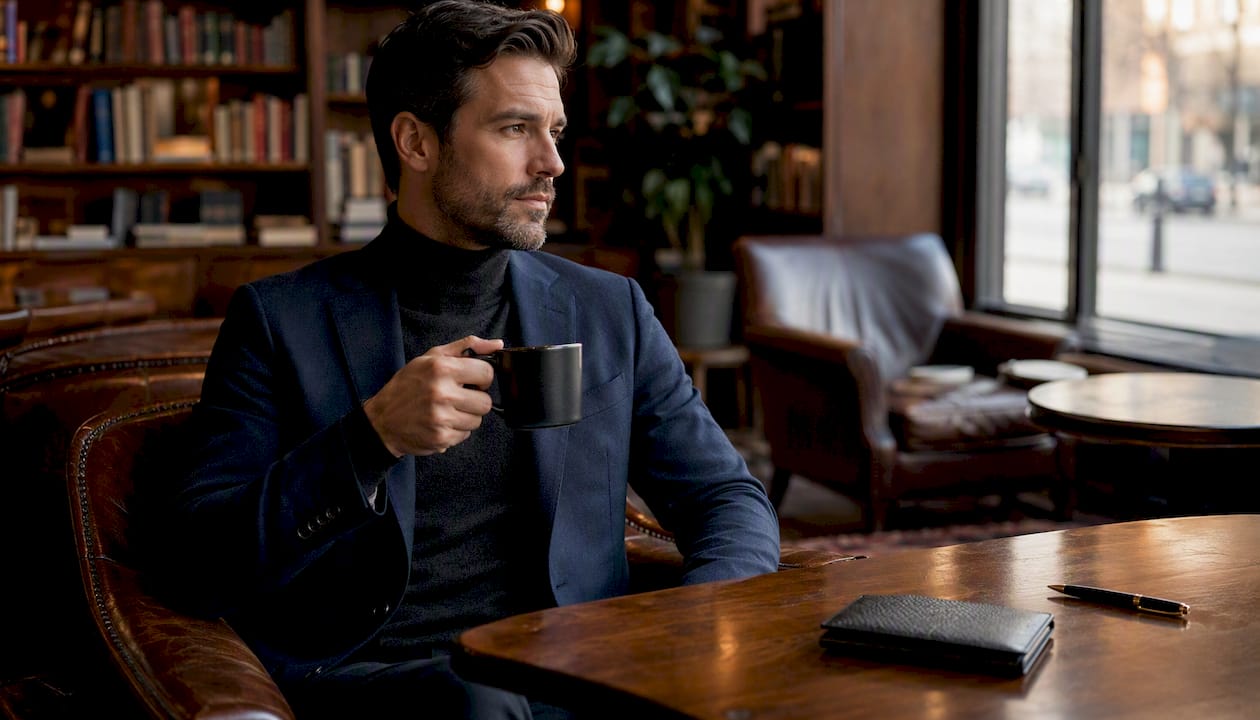
Monochrome and tonal dressing is one of the cleanest ways to look modern without underdressing. An all-navy or all-charcoal look, with slight variation in texture between jacket and trousers, projects quiet confidence.
What turns an alternative into an underdressed mistake: visible logos on any garment, a sloppy or oversized fit, casual sneakers regardless of how expensive they are, or a shirt that is clearly a weekend piece. The standard is always a refined, put-together appearance.
How to adapt your outfit by season and venue
Context shapes fabric, color, and footwear as much as the dress code itself. A wool suit that reads perfectly at a December holiday party will feel heavy and look out of place at a June rooftop reception.
Seasonal adjustments:
- Spring/Summer: Reach for linen blends, tropical wool, or seersucker. Lighter colors, such as stone, light grey, or pale blue, are appropriate and expected. Seasonal materials like linen or seersucker suit warm-weather events and signal that you dressed for the occasion, not just the dress code.
- Fall/Winter: Mid-to-heavyweight wool, flannel, and textured fabrics like tweed or herringbone anchor the look. Deeper colors, navy, charcoal, burgundy, and forest green, feel seasonally appropriate and carry well under evening lighting.
Venue-specific notes:
- Outdoor grass or garden: Avoid thin-soled dress shoes. A rubber-soled Oxford or a sturdy leather loafer with a thicker sole protects both your shoes and your posture. For outdoor venues, choose footwear practical for the terrain but still polished.
- Rooftop or city venue: Standard dress shoes work well. Wind can be a factor; a well-fitted jacket stays put where an open blazer flaps.
- Beach or resort: Linen trousers, a linen blazer, and leather loafers without socks is an accepted combination. Keep the palette light and the silhouette clean.
Layering for unpredictable weather:
- A slim-cut overcoat in camel, charcoal, or navy layers over a suit without adding bulk.
- A cashmere scarf in a neutral tone adds warmth without breaking the formality.
- Avoid puffer jackets, hooded outerwear, or anything that reads as outdoor gear over a cocktail suit.
Fit rules every man should know before the event
Fit is the single variable that separates a polished cocktail look from an expensive but forgettable one. A well-tailored suit in a modest fabric will always outperform an ill-fitting one in the finest wool.
Key fit checkpoints:
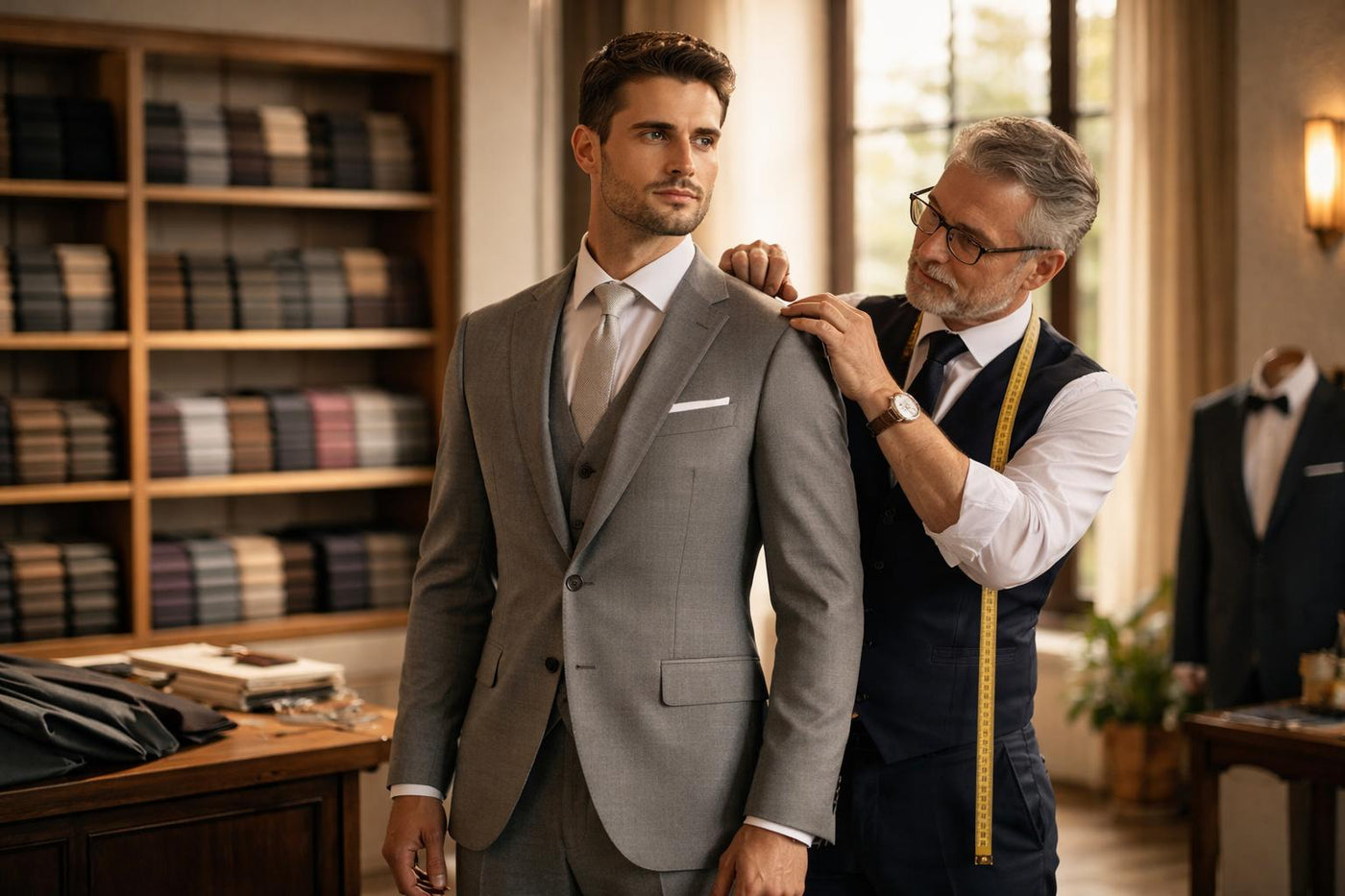
- Shoulders: The seam should sit exactly at the edge of your shoulder bone. No overhang, no pulling.
- Jacket waist: The jacket should follow the natural taper of your torso without pulling at the button.
- Sleeve length: Roughly a half-inch of shirt cuff should show below the jacket sleeve.
- Trouser break: A slight break (the fabric just grazing the top of the shoe) is the current standard. No pooling at the ankle.
- Trouser rise: Mid-rise sits comfortably at the natural waist and reads clean when seated.
Quick alteration checklist for ready-to-wear:
- Hem trousers to the correct break before the event, not after.
- Taper the jacket body if it billows at the sides.
- Shorten sleeves if more than an inch of shirt cuff shows.
- Take in the shirt at the sides if it balloons when tucked.
Before you leave the house:
- Steam or press the suit. Wrinkles read as carelessness regardless of the fabric’s quality.
- Shine or wipe down your shoes. Scuffed leather undermines the entire outfit.
- Use a lint roller on the jacket and trousers.
Pro Tip: If you have less than a week before the event, prioritize trouser hemming and shoe condition above all else. Those two details are what people notice first, and both can be addressed quickly by any local tailor or cobbler.
The items and combinations that break cocktail attire
Some choices are simply outside the cocktail envelope, regardless of how they are styled.
- Jeans of any wash. Even dark, tailored denim is a risk in traditional cocktail settings. Denim is generally unacceptable for cocktail attire; very dark tailored denim may pass at a relaxed gathering, but it is never the safe choice.
- Athletic or casual sneakers. White sneakers, chunky trainers, and running shoes break the formality immediately, regardless of price point.
- Loud logos on any visible garment. A branded polo, a graphic tee, or a jacket with large exterior branding reads as casual.
- Overly casual T-shirts. A crew-neck cotton tee under a blazer does not meet the standard. A fine knit or a dress shirt does.
- Worn or scuffed shoes. Damaged footwear signals inattention to detail more than any other single item.
- A tuxedo. Overdressing is a real misstep. Arriving in a tuxedo to a cocktail event signals you misread the dress code, not that you tried harder.
- Ill-fitting garments. A suit that is two sizes too large or a shirt that strains at the buttons undermines even the best fabric choice.
- Excessive or mismatched accessories. Multiple rings, a novelty tie, and a statement belt worn together compete rather than complement.
Borderline cases with verdicts:
- Dark tailored denim: Acceptable only at explicitly relaxed cocktail events. Never at weddings or formal receptions.
- Dress sneakers (clean leather, minimal sole): Possible at fashion-forward events; risky everywhere else.
- Loafers without socks: Acceptable in warm weather with the right outfit. Use no-show socks to avoid discomfort.
When bespoke tailoring is worth the investment
For a wedding, a milestone celebration, or any event where the stakes are high, bespoke tailoring removes the guesswork entirely. Matching the host’s or groom’s level of formality is the reliable rule for weddings; a bespoke suit built to your exact measurements makes that standard effortless to meet.
The benefits go beyond fit. Bespoke allows you to select the fabric weight and weave for the season, choose a lining that reflects your personal style, and build a garment that performs across multiple events rather than a single occasion. For men who attend several formal events each year, a bespoke suit is a long-term investment, not a one-time expense.
Timeline guidance: For a bespoke suit, allow multiple weeks for patterning and plan for two to three fittings before the event. For alterations to a ready-to-wear suit, one to three weeks is a reasonable window depending on the complexity of the work. Ron & Rich’s bespoke process follows this structure, with each fitting stage designed to refine the garment progressively.
In terms of cost, bespoke suiting in the United States typically ranges from a few hundred dollars for entry-level made-to-measure to several thousand for full bespoke with premium fabrics. Ready-to-wear with professional alterations sits at the lower end and remains a strong option when the timeline is short. The deciding factor is usually the occasion’s significance and how often you will wear the result.
When to book: For a wedding or formal reception, begin the bespoke process at least eight to twelve weeks before the event. Alteration-only work on an existing suit can often be completed in one to two weeks.
Key Takeaways
Cocktail attire for men comes down to three rules: fit first, read the context, and never neglect your footwear.
| Point | Details |
|---|---|
| Fit is the foundation | A well-tailored suit in a modest fabric outperforms an expensive ill-fitting one every time. |
| Context shapes the choice | Venue, time of day, and the host’s formality level determine how formal your interpretation should be. |
| Footwear makes or breaks the look | Clean leather Oxfords, loafers, or Chelsea boots are safe; worn or athletic shoes undermine the entire outfit. |
| Alternatives are valid with care | A blazer with tailored trousers or refined knitwear works when the fit is sharp and the silhouette is clean. |
| Ron & Rich bespoke tailoring | For weddings and milestone events, a bespoke suit from Ron & Rich guarantees fit, fabric, and confidence. |
Why fit matters more than the label on your suit
Most men focus on the brand or the price point when they think about cocktail attire. In our experience at Ron& Rich, the clients who arrive at an event looking genuinely polished are almost never the ones who spent the most. They are the ones who paid attention to fit.
We have worked with clients who brought in a mid-range suit purchased years earlier and left with something that looked entirely new after a proper taper, a sleeve shortening, and a trouser hem. The transformation is not dramatic in the fitting room; it becomes obvious the moment they walk into the event. Fabric quality matters, and we take it seriously, but fit is what the room notices first.
The one thing we tell every client preparing for a cocktail event: do not wait until the week before. Give yourself time to address the details that actually matter, whether that is a single alteration or a full bespoke commission. The confidence that comes from knowing your suit fits correctly is something no amount of last-minute shopping can replicate.
Ron & Rich bespoke tailoring for your next cocktail event
A perfectly fitted suit is the single most reliable way to meet any cocktail dress code with confidence. At Ron & Rich, our bespoke suits and jackets are built from your exact measurements, with fabric and construction choices guided by the occasion, the season, and your personal style. Founded in 1979 by master tailor Richard Fan, our house has spent decades helping men dress well for the moments that matter.
Whether you are preparing for a wedding, a holiday reception, or a milestone event, our consultation process is designed to be straightforward and unhurried. Explore our bespoke tailoring service and book a fitting at your convenience. The right suit, built for you, is always worth the time.
Useful sources and further reading
- Cocktail Attire for Men, Explained by Menswear Experts | GQ
- Cocktail Wedding Attire Guide for Guests | The Knot
- The Ultimate Guide to Wedding Dress Codes | The Knot
- Cocktail Attire for Men Guide | Men’s Health
- Cocktail Attire for Men | Ape to Gentleman
- How to Nail Cocktail Attire for Men | Vogue
- Bespoke Tailoring Process | Ron & Rich