Make Your Suit Last 5–15 Years: Tailoring and Care for Men
A well-made wool suit, properly cared for, typically lasts many years, with construction and fabric setting the ceiling and habits determining whether you reach it. The single most effective practice is rotation: resting a suit for at least 24 hours between wears, paired with prompt repair whenever a seam or button shows strain. Quality of build decides the upper bound; what you do each week decides whether you get there.
TL;DR:
- Full-canvas suits, especially those with full or half canvassing, can last beyond a decade with proper maintenance, unlike fused suits that typically fail within a few years.
- Rotating suits with at least 24 hours of rest between wears and promptly repairing signs of strain significantly extends their lifespan.
- Mid-weight wool fabrics (210 to 310 gsm) resist wear and maintain shape well for frequent use, whereas high Super number cloths are better suited for occasional wear.
- Proper storage in breathable garment bags, wide wooden hangers, and regular pest monitoring prevent moth damage and shape loss.
- Immediate stain treatment with blotting and professional cleaning for oil or grease, combined with timely repairs, help maintain suit appearance and durability.
Table of Contents
- Why construction matters: full canvas, half canvas and fused fronts
- Which fabrics and yarns stand up to wear
- Cleaning: stains, dry-clean frequency and safer alternatives
- Best storage practices and how to prevent moth damage
- Daily and weekly habits to slow fibre fatigue
- Which repairs extend life and when to choose repair over replacement
- How long suits actually last and the signs it’s time to replace one
- A concise, repeatable checklist: weekly, monthly, seasonal
- Ron & Rich perspective: tailoring decisions that lengthen a suit’s service life
- Care after accidental damage: stain removal and emergency fixes
- Investing in construction over frequent replacement
- How Ron & Rich can help: bespoke options and repair services
- Sources
- FAQ
Why construction matters: full canvas, half canvas and fused fronts
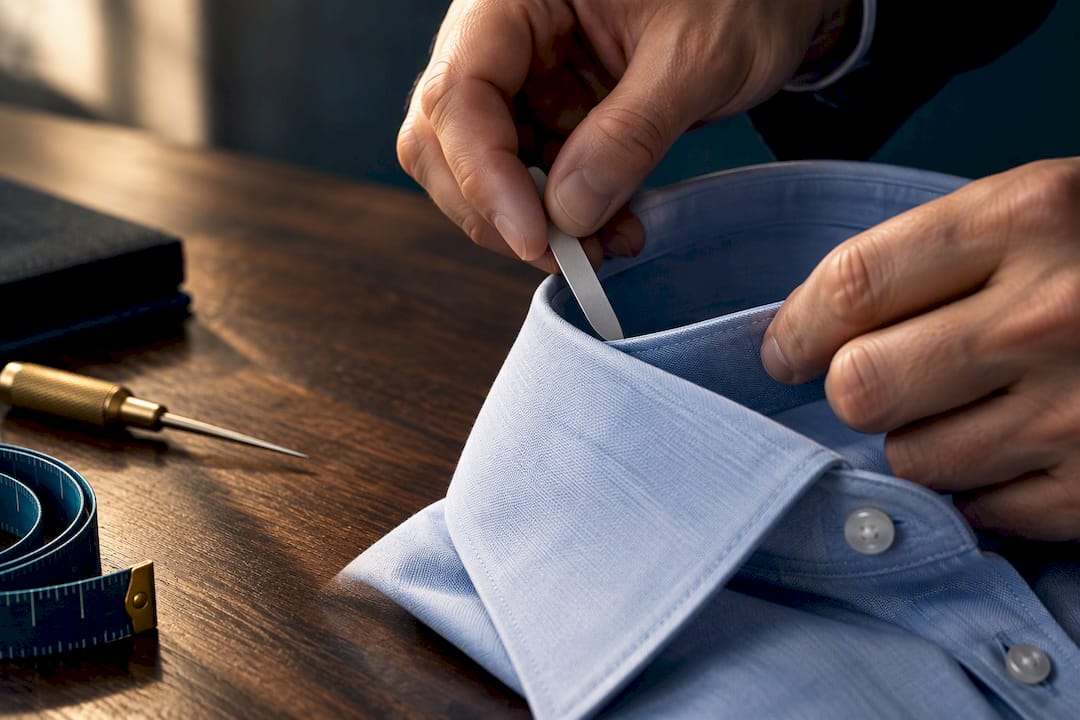
The internal structure of a jacket, more than any label, decides how the garment ages. A full-canvas jacket uses a stitched layer of horsehair and wool canvas between the shell fabric and lining, allowing the cloth to move and mould to the body over years of wear. Half-canvas construction stitches canvas through the chest only, with fusing below, a reasonable compromise for lighter budgets. Fused construction glues a backing to the fabric, which holds its shape initially but tends to bubble or separate once the adhesive breaks down, often within a few years.
A few visible signs separate lasting construction from short-term compromise:
- Hand-finished buttonholes and neat, even pad-stitching along the lapel.
- A chest that drapes softly rather than sitting stiff or board-like.
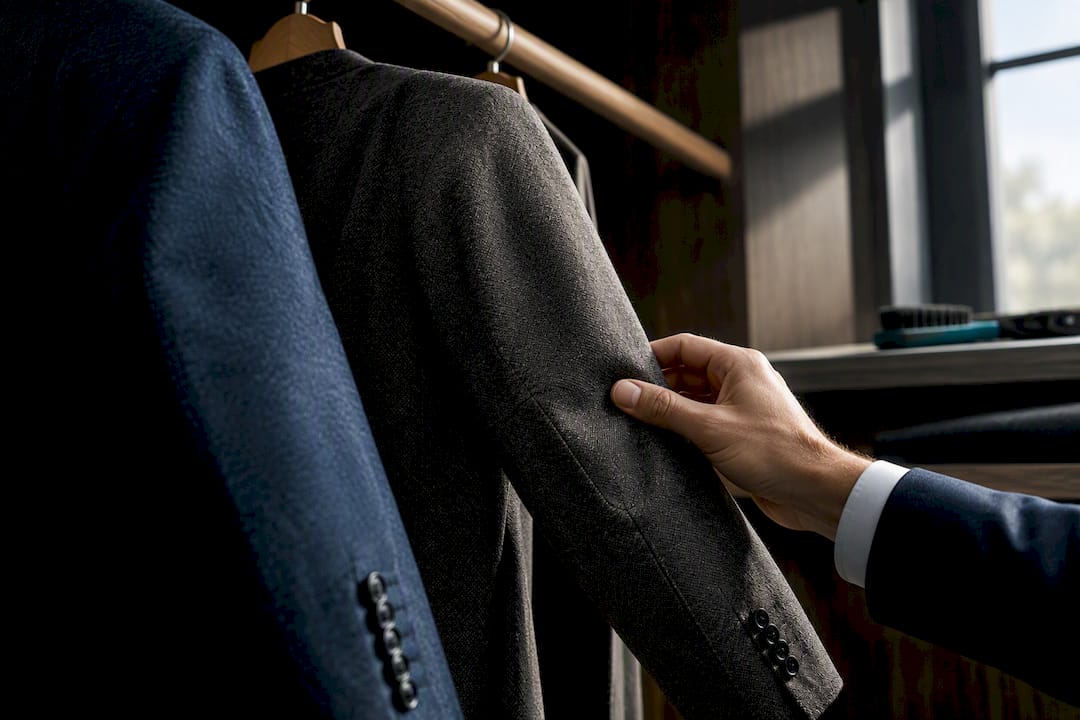
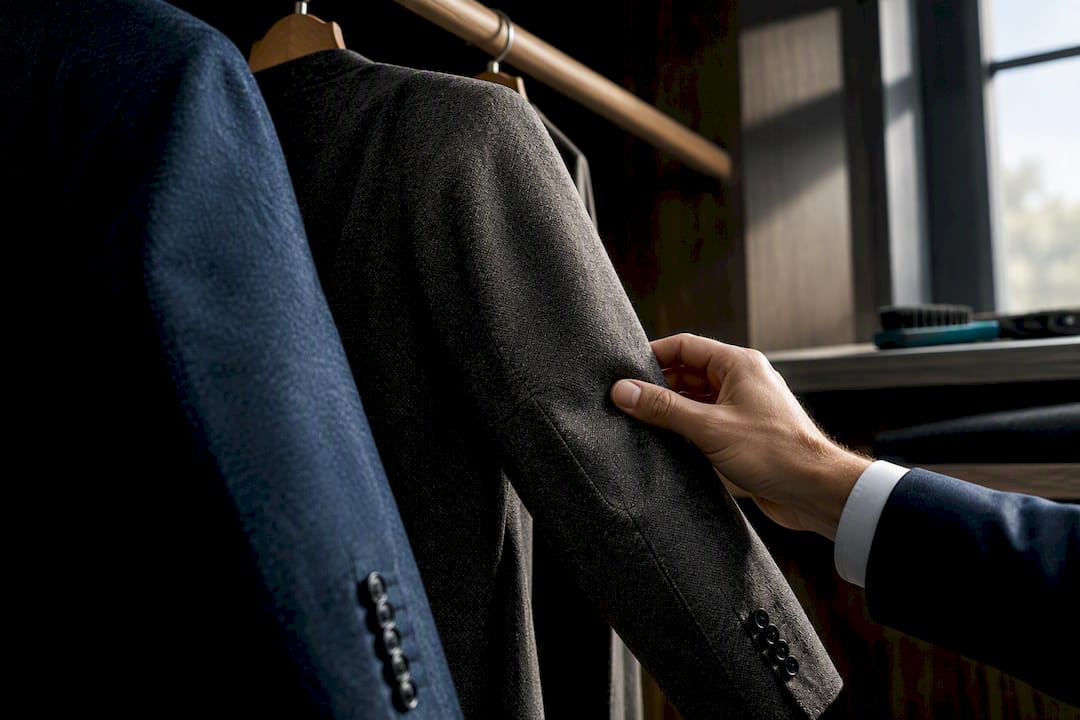
- Shoulders that sit flat without pulling or divots at the sleeve head.
When a stitched canvas begins to separate from years of wear rather than manufacturing fault, re-canvassing can restore structure to an otherwise sound jacket. It is a specialist repair, worth the cost only when the shell fabric and lining remain in good condition. Our guide to fused vs canvassed construction covers the trade-offs in more depth, and the comparison of half canvas versus full canvas explains why the choice matters for anyone planning to keep a suit for years rather than seasons.
Which fabrics and yarns stand up to wear
Fabric choice shapes durability as much as construction does. Mid-weight wools, roughly in the 210 to 310 gsm range, resist abrasion at the elbows and seat while still draping well, making them a sound choice for anyone wearing a suit several times a week. Very fine, high Super number cloths feel luxurious against the skin but their thinner fibres wear faster under friction, so they suit occasional formal use rather than daily rotation.
- Wool-linen blends breathe well in heat but crease more readily and need gentler handling.
- Wool-polyester blends resist creasing and hold shape but rarely match pure wool’s drape or breathability.
- Pure wool in a mid-weight finish balances comfort, structure and resilience across most climates.
A practical durability sweet spot: industry guidance on Super numbers and cloth weight notes that mid-weight wool in the 210 to 310 gsm range retains shape well under frequent wear, while very fine, high Super cloths are better reserved for occasional formal occasions.
In humid climates, natural fibres that release moisture, rather than trap it, help a jacket recover its shape between wears and resist the mustiness that invites pests. Our suit fabric guide walks through seasonal cloth choices in more detail.
Cleaning: stains, dry-clean frequency and safer alternatives
Treat a fresh stain immediately: blot rather than rub, and call a professional cleaner for oil or grease rather than attempting to lift it yourself. Wool fibres are naturally dirt-repellent, but a professional wool-care guide recommends chemical cleaning by professionals over home treatment and warns against bleaching, vigorous wet rubbing or excessive heat.
- Blot the stain gently with a clean, dry cloth; never rub it into the weave.
- Let the suit air fully before deciding whether it needs cleaning at all.
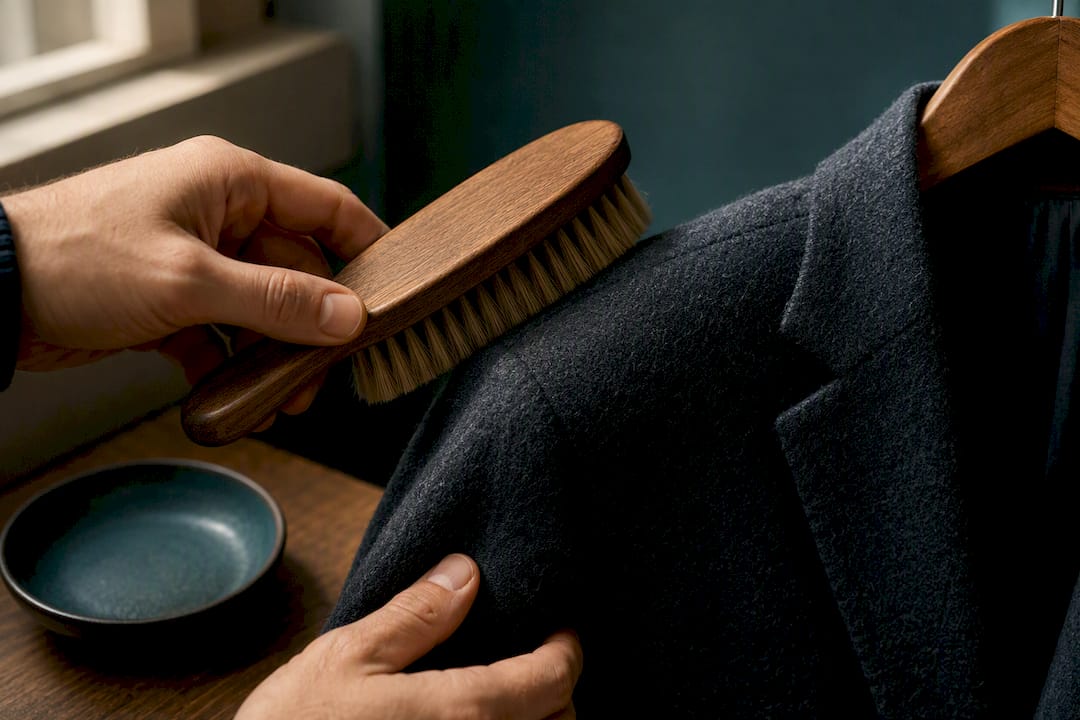
- Brush the fabric with a soft clothes brush to lift surface dust and lint.
- Steam lightly to release creases without saturating the cloth.
- Reserve dry-cleaning for visible soiling or odour that airing cannot resolve, rather than a fixed calendar.
Pro Tip: Brushing after every wear removes far more dust and grit than a monthly dry-clean ever will.
Frequent solvent cleaning strips natural oils from wool and weakens linings over time, so airing, brushing and spot-cleaning should do most of the work between genuine dry-clean occasions.
Best storage practices and how to prevent moth damage
Storage habits decide whether a suit survives between wears intact or quietly loses its shape. A wide, curved wooden hanger supports the shoulders properly, while a breathable garment bag protects against dust without trapping moisture. Cedar-lined or well-ventilated closets, kept relatively cool and dry, discourage the conditions that invite clothing moths.
- Use wooden or well-shaped hangers, never wire, to preserve shoulder structure.
- Store in breathable garment bags rather than sealed plastic, which traps humidity.
- Inspect wool garments regularly and use pheromone traps to monitor for activity.
- Call a professional pest control service if an infestation is confirmed rather than relying on repellents alone.
Guidance from Germany’s Umweltbundesamt on clothing moths confirms that Tineola bisselliella thrives in warm conditions and that effective control combines regular inspection, pheromone traps and non-chemical measures, with professional help advised for persistent cases. For closet organisation ideas that support airflow, Cozee Bay’s storage guide offers practical layout suggestions for a home wardrobe.
Daily and weekly habits to slow fibre fatigue
Wool fibres need time to recover between wears. A rest of at least 24 hours allows the cloth to release moisture and spring back into shape before it takes on the stress of another day.
- Rotate at least two or three suits through regular use rather than wearing one repeatedly.
- Brush the jacket and trousers after each wear, then hang them to air before storing.
- Unbutton the jacket when sitting and empty pockets to avoid pulling at the seams.
Pro Tip: Sitting with the jacket unbuttoned protects the seat and elbows far more than any fabric treatment can.
Fit matters here too: a jacket cut close through the shoulders but generous enough to move in reduces strain on the seams at the elbows and seat, the two points that fail first on a poorly rotated suit.
Which repairs extend life and when to choose repair over replacement
Timely repair, more than any single fabric choice, is what separates a suit that lasts a decade from one that does not survive three years.
- Reinforce stress points, seams, pocket corners and buttonholes, at the first sign of fraying.
- Replace worn lining before it tears further and drags at the shell fabric.
- Re-hem trousers as fit or fashion shifts rather than letting frayed cuffs persist.
- Re-canvas a jacket only when its shell fabric and lining remain sound but internal structure has failed.
When choosing a tailor for structural work, ask how they handle canvas repair specifically, since it is a specialist skill distinct from routine hemming. Our overview of tailoring timelines sets realistic expectations for how long these repairs take.
How long suits actually last and the signs it’s time to replace one
A mass-market fused suit typically holds its shape for a few years of regular wear before the fusing separates. A well-made half or full-canvas suit, cared for properly, can last well beyond a decade.
- Persistent shape loss in the shoulders or lapel that pressing no longer corrects.
- Thinning or holes at the elbows, seat or cuffs, the classic stress points.
- Staining that survives professional cleaning attempts.
One habit with outsized impact: sustainability analysis from the EU Textiles Ecosystem Platform finds that extended use paired with repair, rather than sourcing alone, is what determines a wool garment’s lifetime environmental footprint. When a repair costs more than a third of a replacement’s value and the underlying construction was never built to last, replacement usually makes more sense.
A concise, repeatable checklist: weekly, monthly, seasonal
A short routine, followed consistently, does more for longevity than any single treatment.
- Weekly: brush the jacket and trousers, air them overnight, and check pockets before hanging.
- Monthly: inspect seams, buttons and linings for early wear, and steam lightly to refresh shape.
- Seasonally: have a tailor check structural integrity before off-season storage, and store with cedar protection.
Ron & Rich perspective: tailoring decisions that lengthen a suit’s service life
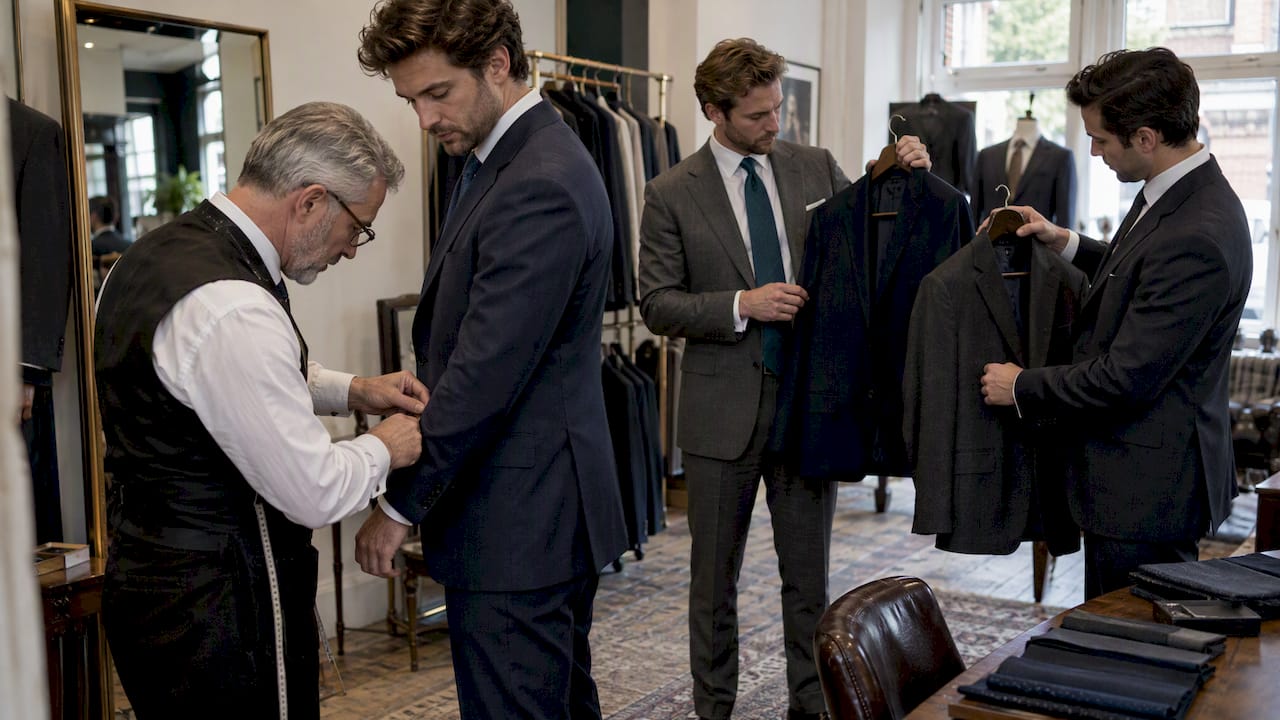
At Ron & Rich, we cut every jacket to the client’s own measurements, which reduces the pulling and strain that shortens a suit’s life far faster than fabric wear alone. Our bespoke tailoring process begins with construction choices made for durability, not just appearance, because a jacket that fits properly from the outset rarely needs the emergency repairs that a mismatched fit demands.
Care after accidental damage: stain removal and emergency fixes
Accidents happen mid-wear, and how you respond in the first few minutes often decides whether a stain becomes permanent. Blot liquid spills immediately with a clean, dry cloth, working from the outside of the mark inward to avoid spreading it further. Never rub, and never apply water directly to wool, since wool-care guidance warns that vigorous wet treatment can distort the weave and set rather than lift a stain.
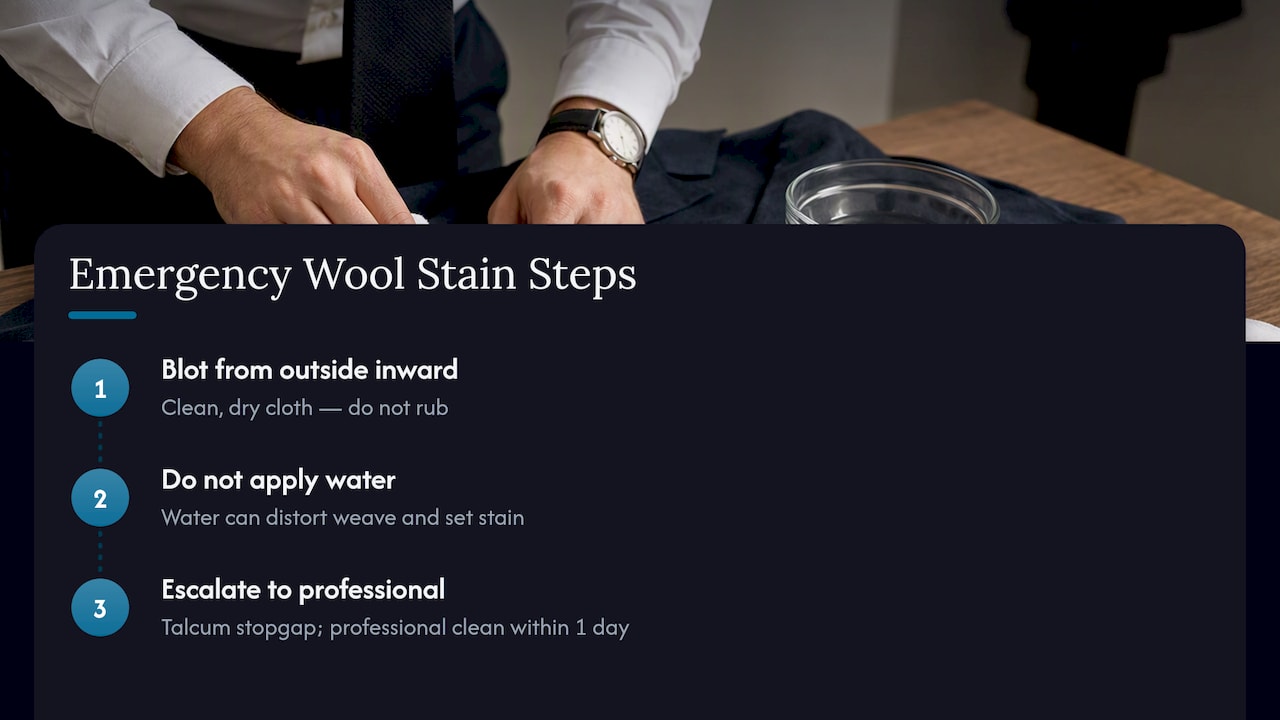
For oil or grease, resist the urge to treat it at home. Blot away any excess, then get the garment to a professional cleaner as soon as possible, ideally within a day, before the stain oxidises and becomes harder to shift. A small amount of talcum powder pressed gently onto a fresh oil stain can absorb some of it while you arrange cleaning, though it is a stopgap rather than a fix.
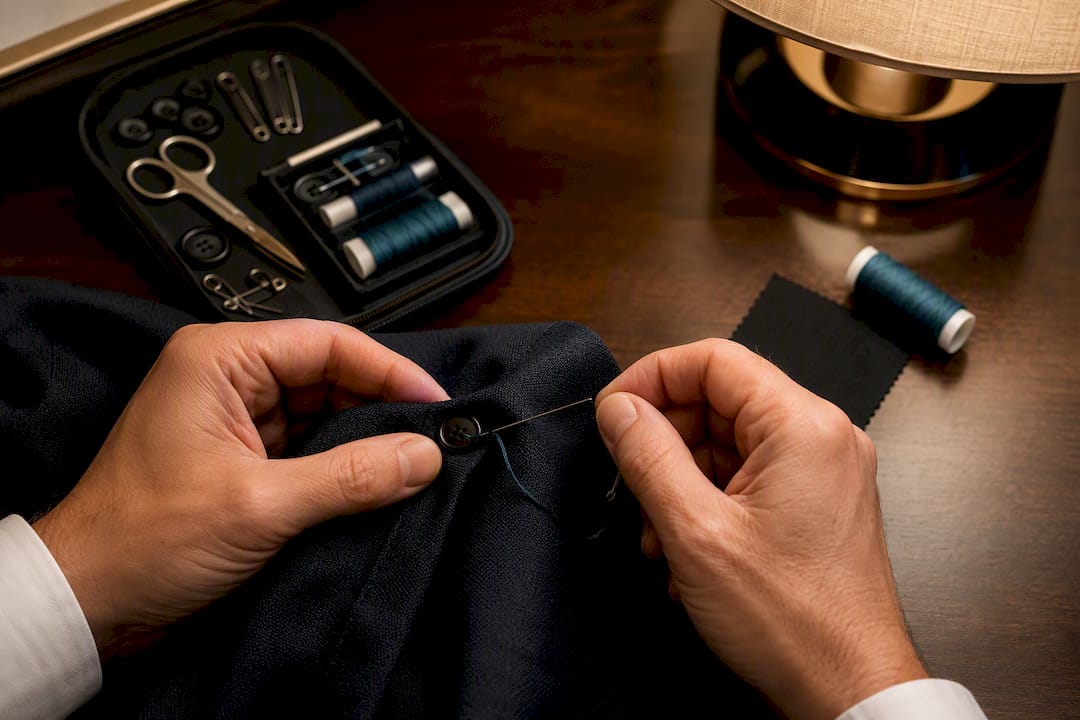
For a torn seam or a popped button away from home, a small sewing kit with matching thread solves the problem in minutes rather than leaving the garment to fray further through the rest of the day. If the iron leaves a shine mark, a damp cloth and gentle steam, never direct high heat, can often lift it, though the wool-care guidance above recommends a maximum sole temperature of 110°C for wool to avoid scorching. When in doubt, a professional cleaner or tailor will always do less damage than an improvised fix at home.
Investing in construction over frequent replacement
The suits that last are rarely the cheapest to buy but are consistently the cheapest per year of wear. Choosing better construction and repairing promptly beats replacing often, on cost and on waste.
Ron
How Ron & Rich can help: bespoke options and repair services

Choosing full or half-canvas construction at the point of ordering, rather than retrofitting it later, is the single decision that most affects how long a jacket will serve you. Our tailors can also re-canvas, re-line and alter existing garments where the underlying cloth still has life left in it, extending a suit’s service well past what mass-market fusing allows. Explore our suits, jackets and repair pricing to book a consultation and discuss what your current wardrobe needs.
Sources
- Organic, recycled and conventional wool: what should consumers know? | EU Textiles Ecosystem Platform
- Kleidermotten | Umweltbundesamt
- Pflegehinweise (wool care guidance) | Rohi
FAQ
How many years should a suit last?
A well-made, well-maintained wool suit typically lasts between five and fifteen years, depending on construction and how often it rests between wears. Mass-market fused suits usually last two to four years before the fusing separates, while full-canvas construction extends well beyond a decade with proper care.
How often should you replace a suit?
Replace a suit when repairs no longer restore its shape or function, rather than on a fixed schedule. Persistent shoulder distortion, thinning at the elbows or seat, or staining that survives professional cleaning are the clearest signs it is time.
Is a suit ruined if it gets wet?
Not necessarily, but wool needs gentle handling once wet: avoid wringing or aggressive rubbing, and let it air dry away from direct heat. Professional wool-care guidance advises against harsh wet treatment and recommends chemical cleaning for anything beyond a light soaking.
Is $2,000 a lot for a suit?
It depends on construction and intended use rather than price alone. A bespoke suit built with full canvas construction, such as those Ron & Rich offers, is designed for years of regular wear, which changes the cost-per-wear calculation considerably compared with a mass-market alternative.