
Stay Comfortable Above 25°C in a Quarter Lined Jacket for Warm Climates
A quarter-lined jacket lines only the upper back and sleeves, leaving the sides and lower body free of interior fabric. That construction makes it lighter and more breathable than a fully lined jacket, while still keeping interior pockets and enough structure to hold its shape. It suits warm climates, smart-casual dressing, and travellers who need a jacket that will not weigh down a suitcase or a summer wardrobe.
TL;DR:
- Quarter lining offers better airflow and lighter weight than half or full lining, making it ideal for hot and humid climates or travel use.
- The construction leaves side panels and the lower body unlined, which slightly softens drape but retains structure in the shoulders and sleeves.
- Choosing moisture-wicking fabrics like Bemberg, cupro, or silk enhances comfort and durability in warm weather, while synthetics are more affordable and easier to care for.
- Future alterations are easier in quarter-lined jackets due to more flexible seam allowances, especially in the unlined sections.
- Proper seam reinforcement during tailoring prevents fraying and extends the jacket’s lifespan in high-movement or travel conditions.
Table of Contents
- What a quarter-lined jacket is and how it is made
- How quarter lining changes drape, structure and comfort
- Pros and cons of quarter lining versus other lining styles
- Which lining materials to choose and why
- Tailoring and alteration implications: Ron & Rich’s practitioner guidance
- How to choose the right lining for your jacket
- Care, maintenance and expected lifecycle
- When Ron & Rich recommends quarter lining
- Bespoke quarter-lined jackets at Ron & Rich
- Sources
- FAQ
What a quarter-lined jacket is and how it is made
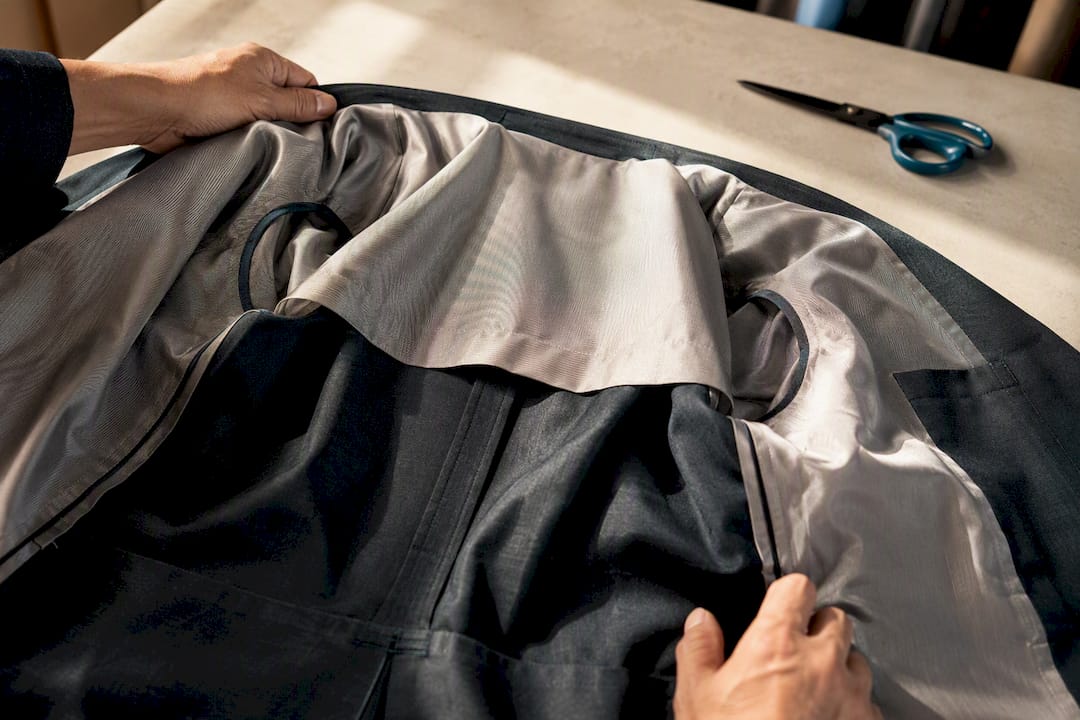
A quarter-lined jacket, sometimes called a butterfly lining, covers the upper back panel and the full sleeves in fabric, but leaves the side panels, chest lining and lower body exposed. The construction is deliberate: those are the areas where a lining does the most work, smoothing shoulder movement and letting an arm slide in and out without friction against wool or linen. Everywhere else, the jacket’s outer cloth is left to breathe.
The “butterfly” name comes from the shape the lining takes when laid flat: a wing-like panel across the shoulders and upper back, tapering down each sleeve. Paul Smith’s tailoring notes describe it as a way to achieve a smooth shoulder finish without adding bulk, which is precisely why it sits between an unlined jacket and a half-lined one rather than replacing either outright.
Turn a quarter-lined jacket inside out and you will notice:
- A lined panel across the shoulder blades and down both sleeves
- Raw or bound seams visible at the side seams and hem
- Interior pockets still present, stitched into the lining where it exists
- Exposed canvas or interlining at the chest, softened by careful seam finishing
How quarter lining changes drape, structure and comfort
Removing lining from the sides and lower body changes how the jacket falls. Without that extra layer of fabric between the shirt and the wool, the cloth drapes closer to the body, and some wearers notice a softer, less structured fall through the torso. Forum discussions among tailoring enthusiasts have raised this directly, questioning whether quarter lining reduces drape and structure compared with a fully lined jacket, and the honest answer is: slightly, yes, though not in a way most men would notice without direct comparison.
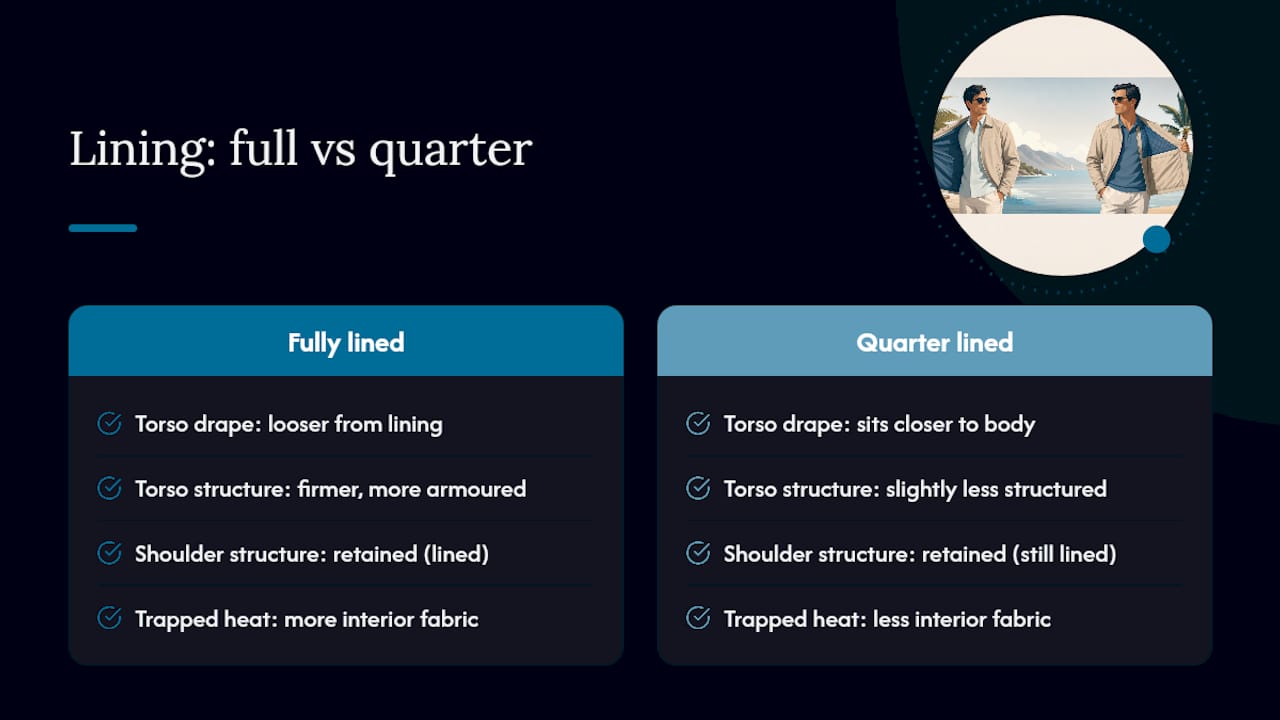
Structure is retained exactly where it matters most for fit: the shoulders and sleeve heads still have their lining, so the roll of the sleeve and the set of the shoulder stay clean. What loosens is the body, which becomes more responsive to movement and less armoured against the wearer’s own warmth.
That trade produces the comfort benefit quarter lining is chosen for. Less interior fabric means less trapped heat, and partial linings noticeably increase airflow compared with a fully lined equivalent, which is why the style shows up so often in warm-weather tailoring.
Pros and cons of quarter lining versus other lining styles
Quarter lining is a compromise, not a universal upgrade, and it helps to see where it wins and where it does not.
- Lighter overall weight than a half-lined or fully lined jacket, noticeable when worn for a full day.
- Better airflow through the torso, since the side panels have no barrier fabric.
- Interior pockets retained, unlike most fully unlined jackets, which often sacrifice them.
- Lower thermal retention, making it genuinely comfortable above roughly 25°C.
- Exposed seams at the hem and sides if the tailor’s finishing is careless, which shows on cheaper ready-to-wear.
- Reduced alteration allowance in the unlined sections, since there is less fabric to let out later.
- Less suited to formal suiting that needs a fully structured, closed interior, such as black-tie or heavyweight winter suits.
A half-lined jacket keeps some of that airflow benefit while adding lining across the chest for a touch more structure, and a fully lined jacket remains the right call for formal suits or cold-weather coats where warmth and a closed interior matter more than breathability.
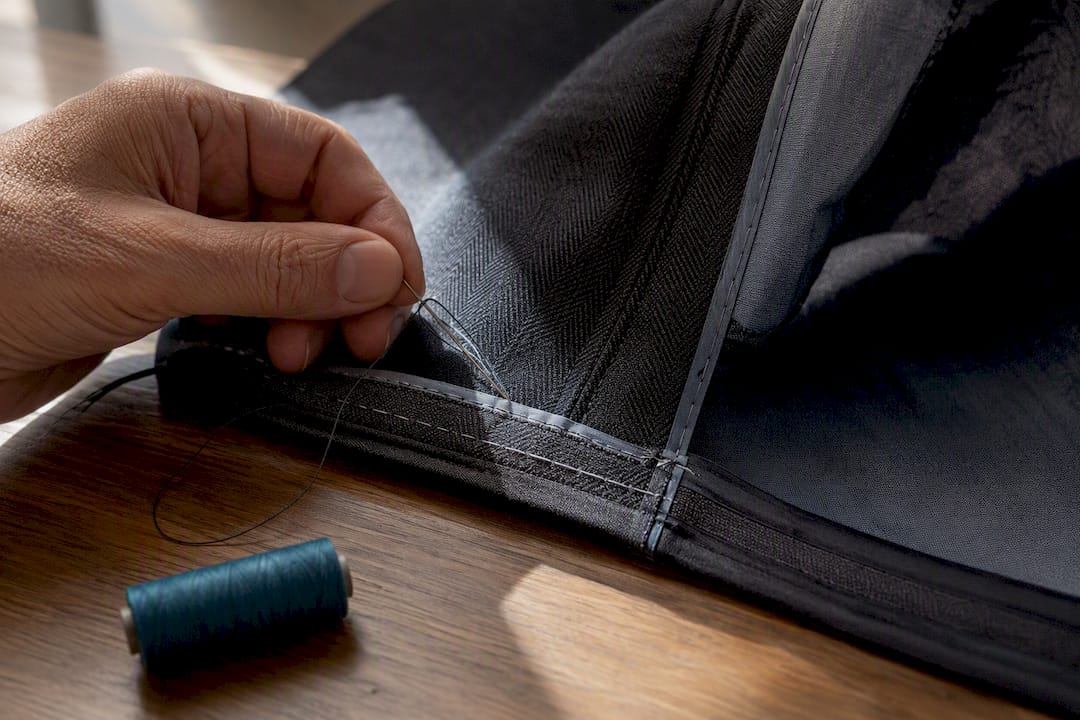
Pro Tip: Ask your tailor to reinforce the hem and side seams on a quarter-lined jacket even if you never plan to let it out. Reinforced seams cost little at construction stage but prevent fraying that becomes expensive to fix later.
Which lining materials to choose and why
The lining fabric matters more on a quarter-lined jacket than on a fully lined one, because the panel that remains is small but sits directly against the wearer’s shirt and skin at the shoulders and arms.
- Bemberg and cupro: regenerated cellulose fibres prized for moisture-wicking and a cool, dry hand. Tailoring guides consistently recommend Bemberg and cupro for warm climates because they manage humidity better than most synthetics.
- Silk: the most luxurious option, with a superb drape and cool touch, but less durable under repeated friction from a jacket sleeve and considerably more expensive.
- Synthetic linings (polyester or viscose blends): the most affordable and durable choice, though they trap more heat and can feel clammy in humid weather. Largely discourage and not something we will use at Ron & Rich
Colour and finish also matter beyond the visible flash of lining at a cuff. A lining that matches or complements the shell fabric reads as considered rather than accidental, and a smoother finish reduces friction against a shirt sleeve.
Lining quality is not purely cosmetic. Industry guidance notes that a well-chosen lining protects the jacket’s inner construction and seams, which extends the working life of the garment rather than just its appearance on day one.
Tailoring and alteration implications: Ron & Rich’s practitioner guidance
Tailors have a practical reason to resist a fully unlined first jacket, even for clients set on maximum breathability. A lining, even a partial one, provides an internal allowance that makes future adjustments easier to execute cleanly, which matters most on a garment your body will still be wearing after a few kilograms of change.
This shapes how lining choices are discussed during a fitting:
- For a first bespoke commission, it is usually recommended to have at least a quarter lining, giving room to adjust the waist and shoulders as fit needs shift over time.
- For later commissions, once it is known how a client’s body and preferences have settled, a lighter or more selectively unlined build can be a reasonable request.
- Seams at the hem and sides are reinforced as standard practice on quarter-lined pieces, and pocket placement is discussed early since unlined panels change how an interior pocket sits.
- Where maximum alteration room is desired later, a slightly wider seam allowance is specified at the point of cutting rather than trying to add it back afterwards.
How to choose the right lining for your jacket
A short checklist makes this decision faster than debating lining styles in the abstract:
- Climate: consistently warm or humid, lean toward quarter or unlined; consistently cool, lean toward half or full.
- Frequency of wear: a jacket worn several times a week benefits from the durability of at least a partial lining.
- Future alterations expected: if your weight or build is likely to shift, keep more lining for adjustment allowance.
- Desired weight: travel and all-day wear favour the lighter feel of quarter lining.
A travel blazer built for a week of humid meetings is a natural fit for quarter lining. A daily office jacket in a temperate climate often does better half-lined, balancing structure against comfort. A formal wool suit for winter events should stay fully lined. As a rule of thumb: unlined for the hottest, most casual pieces, quarter for warm-weather versatility, half for year-round office wear, and full for formal or cold-climate suiting. These choices pair naturally with smart-casual outfit formulas and general wardrobe-building guidance if you are building a warm-weather rotation from scratch.
Care, maintenance and expected lifecycle
A quarter-lined jacket needs slightly different upkeep depending on what its lining is made from.
- Cupro and Bemberg: dry clean rather than wash, and avoid excessive steam heat, which can weaken the fibres over repeated cleanings.
- Silk linings: always dry clean, and store away from direct sunlight to prevent fading.
- Storage: hang on a proper shaped hanger, since the unlined sections crease more visibly than a fully lined equivalent when folded.
- Travel: pack with the lined panel facing outward against other garments to reduce friction wear on exposed seams.
- Warning signs: fraying at the hem, loosening at the pocket bag, or a shell fabric that has started to sag are all signals it is time to see a tailor about reinforcement or a partial re-lining.
When Ron & Rich recommends quarter lining
We reach for quarter lining most often when a client lives or travels somewhere hot and wants a jacket that still looks properly tailored, not just casual. It gives the shoulder the clean line a bespoke client expects, while sparing them the discomfort of a fully lined jacket in humid heat. One client ordering a travel blazer for a string of tropical business trips settled on quarter lining after trying a fully lined sample and finding it simply too warm for a full day of meetings. That is usually the deciding moment: comfort in the body, structure kept in the shoulder.
— Richard Fan
Bespoke quarter-lined jackets at Ron & Rich
If you have read this far weighing quarter lining against the alternatives, the next step is a proper fitting rather than more research. Ron & Rich builds each jacket around a client’s climate, wardrobe and body, starting with a consultation where lining choice is discussed alongside cloth, canvas and shoulder construction, not decided by a form.
Our bespoke tailoring process walks through fabric selection, initial fittings and construction decisions like lining together, so a quarter lining is specified with the right seam allowances from the start rather than compromised on later. For readers who prefer to browse first, our suits and jackets range shows the finished results across different lining and cloth combinations. Book a consultation through our bespoke tailoring page to talk through what suits your climate and your wardrobe.
Sources
- Men’s Jacket Linings | Should Jackets Be Lined Or Unlined?
- Fully lined coats: what’s the meaning? | ShunVogue
- Everything you need to know about suit linings | Paul Smith
- How to choose the best lining for your suit jackets
FAQ
What does a lined jacket mean?
A lined jacket has fabric stitched inside the shell, covering some or all of the interior panels to protect seams, ease movement, and give the garment a cleaner finish. Full, half, quarter and unlined describe how much of that interior is covered.
What is the warmest lining for a jacket?
Silk and heavier synthetic linings retain the most warmth because they trap body heat close to the shell fabric, making them better suited to cold-climate coats than to warm-weather jackets.
What type of lining is best for suits?
Bemberg and cupro are widely recommended for suit linings because they manage moisture and stay breathable in warm conditions, while silk suits formal suits where drape and luxury matter more than climate performance.
What are the differences between a half-lined and a fully lined jacket?
A half-lined jacket covers roughly the upper body, including the chest and back, while leaving the lower panels unlined for airflow. A fully lined jacket covers the entire interior, adding warmth and structure but sacrificing the breathability that partial linings offer.


