Basted Fitting for Bespoke Suits: What Clients Need to Know
A basted fitting is the first try-on of your actual suit cut in your chosen fabric, temporarily assembled with long hand stitches so the tailor can refine fit, drape, and proportion before any permanent work begins. Every structural decision you make at this appointment shapes the finished garment. Choices left unresolved here become far harder, and sometimes impossible, to correct once the cloth is permanently stitched.
Table of Contents
What a basted fitting actually looks and feels like
The word “basted” comes directly from the temporary tacking stitches
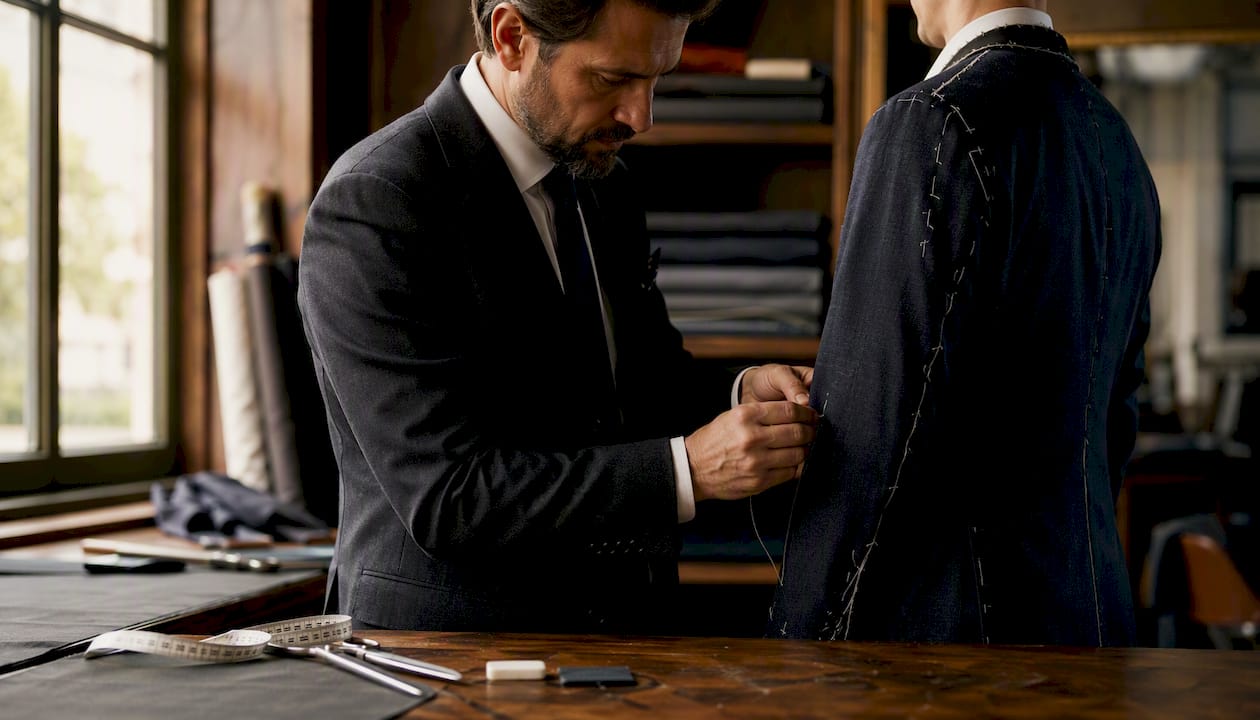
a tailor uses to hold the garment together at this stage. These are long, loose hand stitches, typically in white or contrasting thread, that keep seams in place without committing the fabric. When you try on a basted suit, expect it to look and feel noticeably unfinished.
Visible signs you should expect:
-
Unpressed seams along the sides, chest, and back, often standing away from the body
-
Visible basting thread at major seams, sometimes with pins still in place
-
Partial or no lining — the jacket interior may be bare or only partially tacked
-
Temporary closures rather than finished buttonholes
-
Unfinished edges on sleeves, hem, and lapels
The tailor uses your real fabric at this stage, not a muslin mockup, because the final cloth’s drape behaves differently from any substitute. A heavy wool, for example, falls and breaks at the chest in ways that cannot be predicted from a cotton muslin. This is the moment the garment first reveals its true character.
Where the basted fitting sits in the bespoke timeline
The basted fitting typically falls early in the process, after the initial measurements and pattern cutting but well before any permanent finishing. A simplified view of the sequence:
| Stage | What happens | Typical timing |
|---|---|---|
| Consultation & measurement | Fabric selection, style choices, body measurements | Day 1 |
| Pattern cutting & basting | Tailor cuts cloth and assembles with basting stitches | Weeks 1– |
| Basted fitting | First real-fabric try-on; major adjustments marked | Typically within a few weeks after pattern cutting, before permanent finishing |
| Adjustment & re-fitting | Corrections made; one or more follow-up fittings | Weeks 5– |
| Final fitting | Fully finished garment; minor shaping only | Weeks 8– |
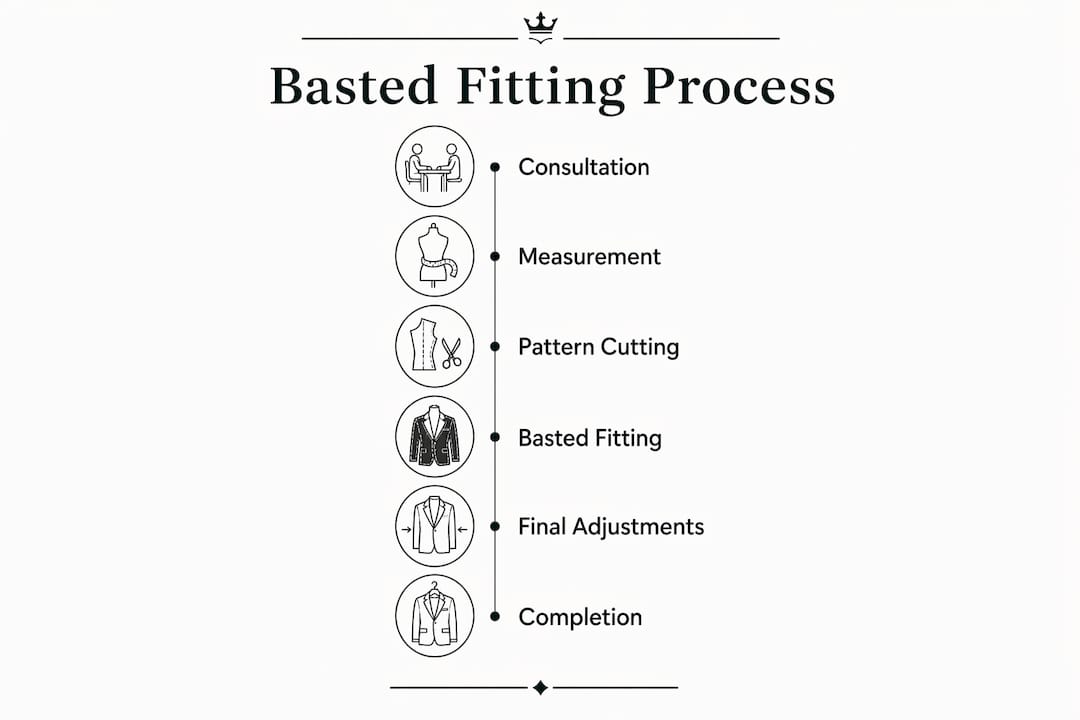
Most bespoke houses schedule several fittings in total, with the basted fitting as the first or second appointment depending on whether a muslin stage precedes it. The full bespoke process at Ron & Rich follows this multi-fitting structure, with each stage documented before the next begins. Lead times and costs vary by tailor and complexity; always confirm both before you sign off on the work.
Basted fitting versus muslin versus final fitting
Each fitting stage serves a distinct purpose. Confusing them leads to missed opportunities or unrealistic expectations.
| Fitting type | Material used | Primary purpose | What can change |
|---|---|---|---|
| Muslin fitting | Inexpensive test cloth | Pattern validation; major shape changes | Block shape, proportions, silhouette |
| Basted fitting | Real/final fabric | Drape, proportion, and structural fine-tuning | Seam placement, chest shape, shoulder, waist |
| Final fitting | Fully finished garment | Detail checks; minor shaping | Hem length, minor suppression, button placement |
A muslin fitting is preferred when major pattern reshaping is likely before cutting into expensive cloth. The basted fitting is preferred when the final fabric’s drape is central to the decision. Not every tailor offers both; ask specifically which stages are included in your commission. Some ready-to-wear alteration workflows also borrow basted methods for complex adjustments, though the scope is narrower than full bespoke.
What the tailor checks during the fitting, step by step
A thorough basted fitting moves through the garment systematically. Here is the order a skilled tailor follows, and what you should be watching alongside them.
Shoulders first. The shoulder seam should sit precisely at the shoulder’s edge, with no forward or backward roll. The sleeve head must seat cleanly into the armhole without pulling or bunching.
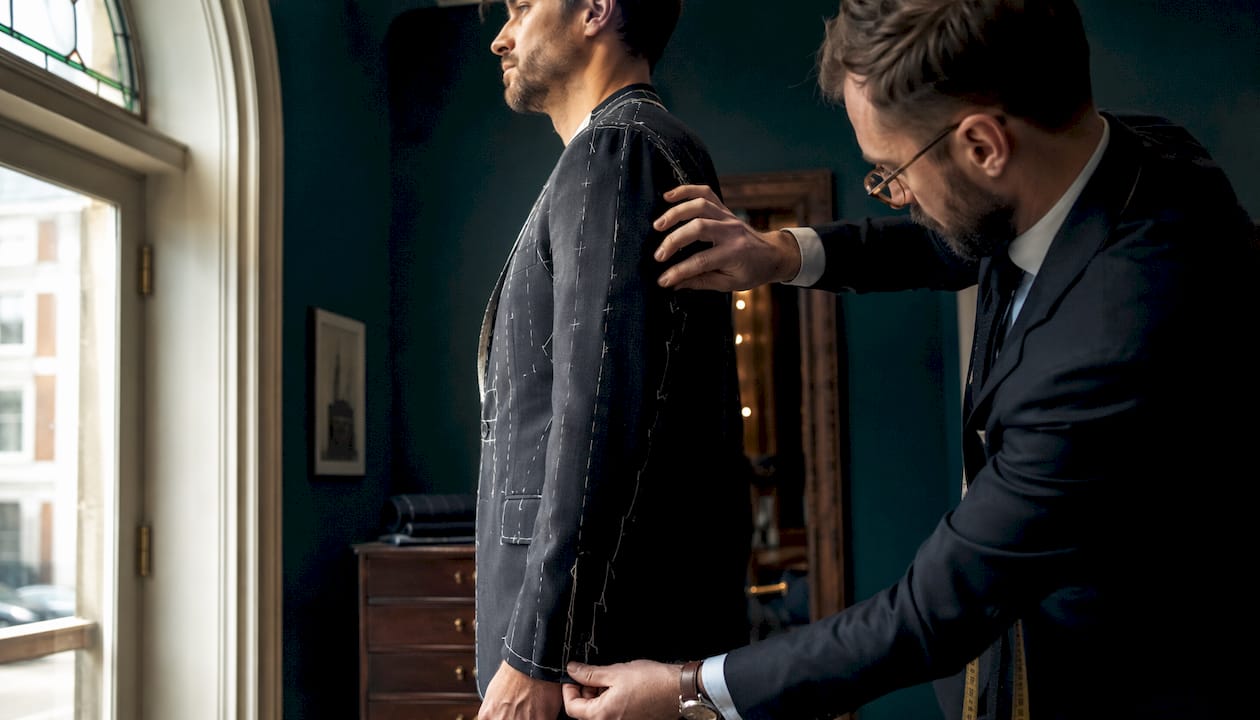
Chest and back. The tailor looks for drag lines across the chest, pulling at the back, or excess fabric pooling below the shoulder blades. Ease, the built-in room for movement, should feel comfortable without looking sloppy.
Waist and torso. How much suppression is intended, and where? The tailor marks where fabric should be taken in or let out along the side seams.
Sleeves, hem, and trousers. Sleeve length is checked with your arm relaxed at your side. For trousers, the tailor checks rise, seat, and hem break with you standing and seated.
Lapel roll and collar stand. The lapel should roll naturally without gaping; the collar should lie flat against the shirt collar with no daylight showing.
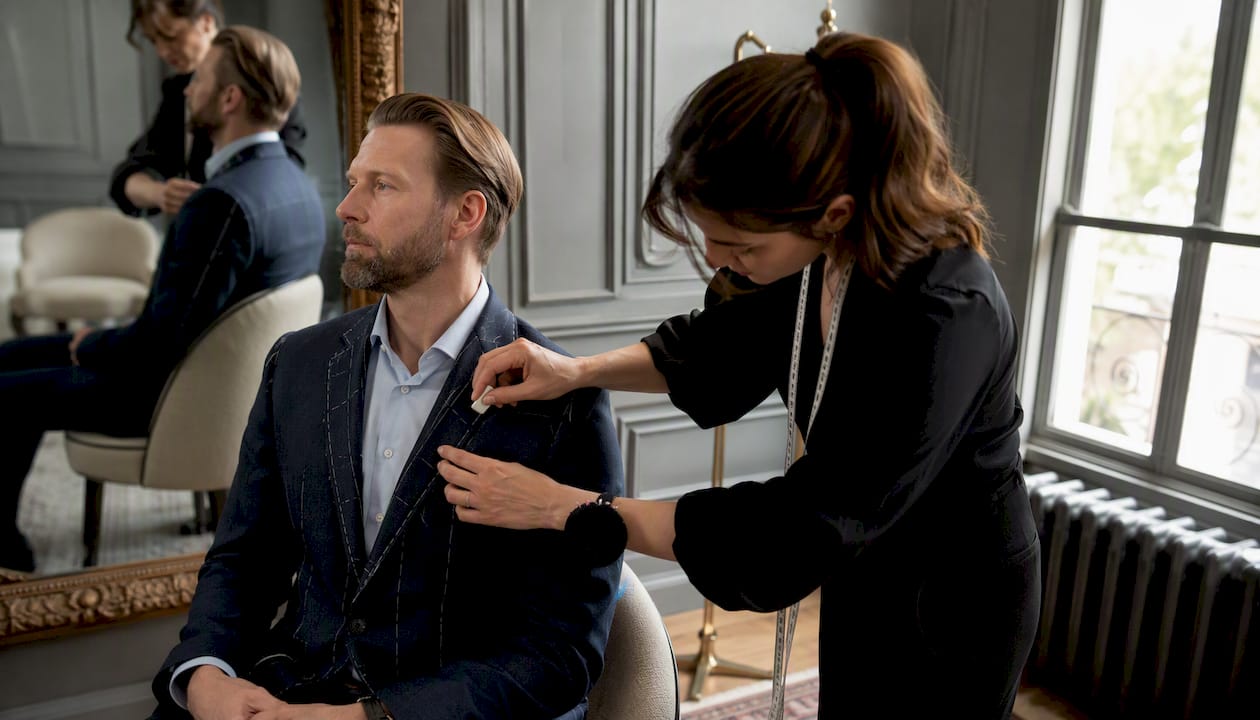
Vents and pleats. Back vents should lie flat when standing and open cleanly when you move.
Pro Tip: Sit down, reach forward, and cross your arms during the fitting. These movements reveal tightness across the back and under the arms that standing still will never expose.
A good tailor will mark every agreed adjustment directly on the basted seams and give you a written or photographed record of the changes. If no record is offered, ask for one.
Which decisions are finalized at the basted fitting
The basted fitting is where structural choices are locked in. Once permanent stitching begins, the options narrow considerably.
Decisions typically finalized at this stage:
-
Overall silhouette and proportion (slim, classic, relaxed)
-
Shoulder width and shape
-
Major chest and waist adjustments
-
Hemline placement for jacket and trousers
-
Lapel width and roll point
What usually cannot be changed after permanent stitching:
-
Major pattern alterations that require re-cutting the cloth
-
Shoulder width beyond a small seam adjustment
-
Block or shape changes that alter the original pattern
The bespoke process at Ron & Rich captures adjustments in writing before any permanent work proceeds, so both tailor and client share a clear record of what was agreed.
How to prepare for your basted fitting
Arriving prepared makes the difference between a productive appointment and a wasted one. A short checklist:
Bring with you:
-
The shoes you intend to wear with the suit (heel height affects trouser break)
-
Your usual dress shirt and undershirt
-
Any accessories that affect fit: a vest, suspenders, or a thick watch
-
Reference photos if you have strong preferences about lapel roll, collar height, or chest shape
What to wear to the appointment:
-
Thin, close-fitting garments under the suit, not a heavy sweater or padded jacket
-
Avoid bulky outerwear that distorts how the jacket sits on your shoulders
How to behave during the fitting:
-
Stand naturally, the way you actually stand, not at attention
-
Move through your typical range of motion: sit, reach, walk a few steps
-
Be explicit about the suit’s intended use (daily office wear, a wedding, formal events) since this affects how much ease the tailor builds in
Pro Tip: Bring a photo of a suit you admire and one you dislike. Showing a tailor what you want to avoid is often more useful than describing what you want.
Questions to ask your tailor and red flags to watch for
Walking into a basted fitting with a few direct questions protects your investment and clarifies expectations on both sides.
Questions worth asking:
-
What can still be adjusted after this fitting, and what cannot?
-
Which seams are basted intentionally for adjustment, and which are finished?
-
Will any changes affect the timeline or the quoted price?
-
How will the agreed adjustments be documented before I leave?
Red flags to take seriously:
-
No written or photographic record of agreed changes
-
Pressure to approve changes without a try-on
-
Refusal to show you the basted seams or explain what is temporary
-
No movement or seated check during the appointment
Ask for marked notes or photos of the basted garment before you leave. A clear record of agreed adjustments reduces rework and prevents miscommunication at every subsequent stage.
How Ron & Rich approaches the basted fitting
At Ron & Rich, the basted fitting reflects the house’s founding philosophy: precision at every stage, with no permanent step taken before the client has approved the work. Founded in 1979 by master tailor Richard Fan, the house has built its bespoke process around this principle.
In practice, this means:
-
Only areas unlikely to change are finished before the basted fitting; side seams, chest shaping, and sleeve heads remain basted so they can be unpicked cleanly without damaging the cloth
-
Adjustments are marked directly on the garment and recorded in writing before the client leaves
-
Client sign-off is captured before any permanent stitching begins, so there is no ambiguity about what was agreed
-
Fabric integrity is protected by using basting stitches that release without leaving marks or distorting the weave
The finished work across Ron & Rich’s suit and jacket range reflects what this discipline produces: garments where the fit reads as effortless because the structural decisions were made carefully, at the right stage, in the right cloth.
Key Takeaways
A basted fitting is the single most consequential appointment in the bespoke process, where structural decisions are made in the real fabric before any permanent work begins.
| Point | Details |
|---|---|
| What “basted” means | Temporary long hand stitches hold the garment for fitting; expect visible thread and unfinished seams. |
| When it happens | Early in the bespoke timeline, early in the process after pattern cutting but before permanent finishing. |
| What to decide here | Shoulder shape, chest and waist suppression, hemline, and silhouette are finalized at this stage. |
| How to prepare | Bring your dress shoes, a thin shirt, and reference photos; move naturally during the appointment. |
| Ron & Rich’s approach | Ron & Rich leaves side seams and chest shaping basted until client sign-off, protecting fabric and ensuring agreed changes are documented. |
What clients most often get wrong at this appointment
Most clients arrive at a basted fitting focused on how the suit looks in the mirror. That instinct is understandable, but it misses half the picture. Fit is also about movement, and a garment that looks perfect while you stand still can bind across the back the moment you reach for a handshake.
The other habit I see consistently is hesitation. Clients notice something that feels slightly off but say nothing, assuming the tailor will catch it or that it will resolve itself in the finished garment. It rarely does. The basted fitting exists precisely so that you can speak freely, because at this stage, every seam can be moved without consequence. After permanent stitching, the options are narrower and the cost of correction is real.
My advice: arrive with opinions, move during the fitting, and say what you notice. A good tailor welcomes that conversation. It is the only way to produce a suit that fits the way you actually live in it, not just the way you stand in a fitting room.
Book a basted fitting with Ron & Rich
The basted fitting is where a bespoke suit either earns its price or falls short of it. At Ronandrich, every commission includes a structured fitting sequence with documented adjustments and client sign-off at each stage, so nothing is left to assumption.
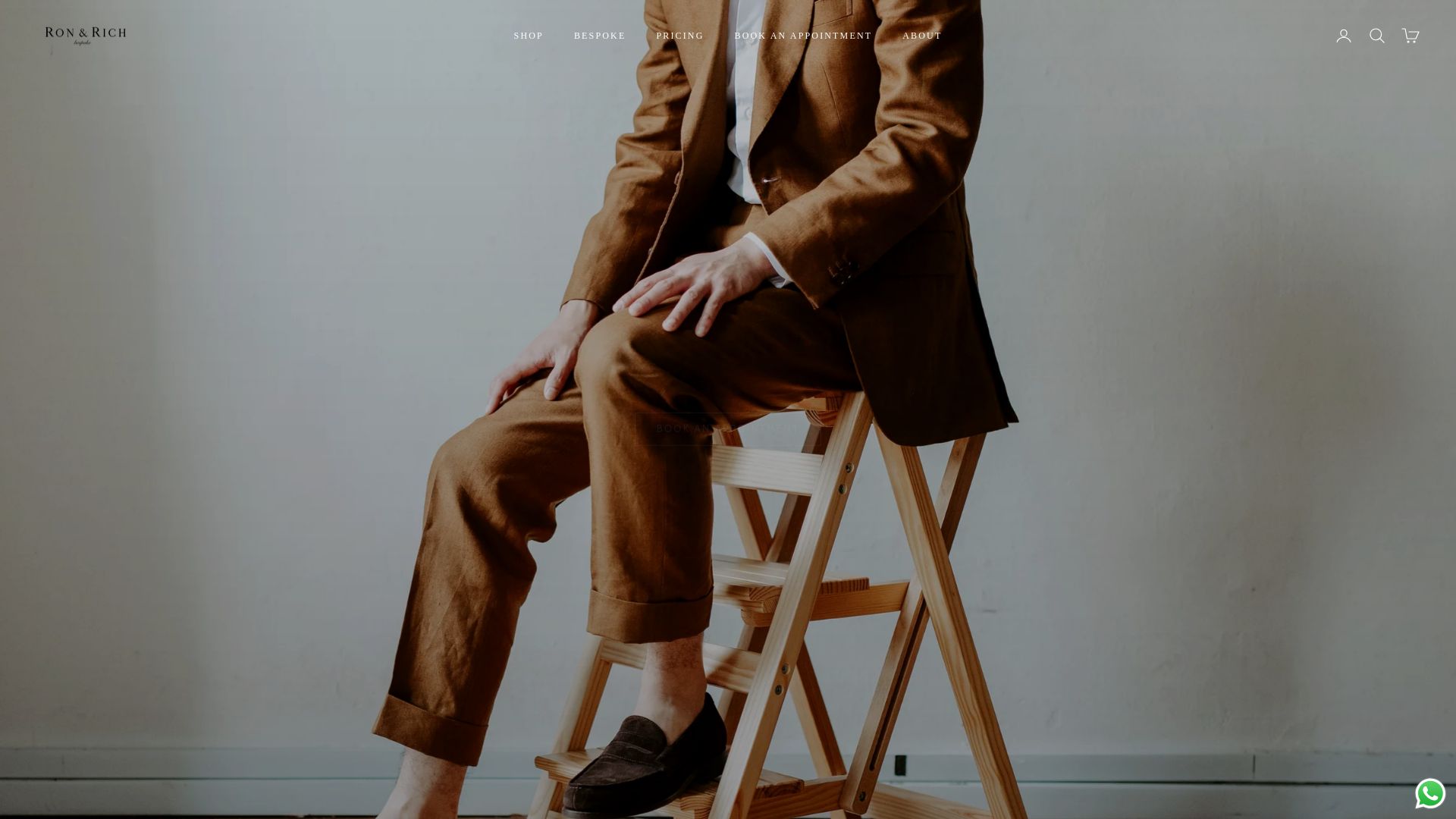
If you are ready to experience the process firsthand, our bespoke suits and jackets page outlines what to expect from your first consultation through to the finished garment. Lead times vary by commission; contact us to confirm current availability and schedule your appointment. For a full overview of how each fitting stage is structured, the bespoke service page walks through the process from first measurement to final delivery.
Useful sources and further reading
-
Tiffany’s Basted Fitting + Prep & Corrections — Brooks Ann Camper Bespoke Sewing — a detailed real-world example of a basted fitting with corrections
-
Baste Fitting: The core of a tailor made suit — DEOOST — explains the origin and purpose of the basted stage
-
Basted Fitting or Muslin Fitting: what’s best for you? — Mohan’s Tailors — practical comparison of muslin and basted approaches
-
Ronandrich bespoke service overview — full description of the bespoke process and fitting sequence
-
Ronandrich bespoke process page — how adjustments are documented and approved at each stage
-
Ronandrich suits and jackets — finished work and tailoring standards